Why Does My Coffee Taste Sour? (And How to Fix It)
Sour coffee is one of the most common brewing issues. Understanding what causes it can help you create a smoother, more balanced cup.


Why Does Coffee Taste Sour?
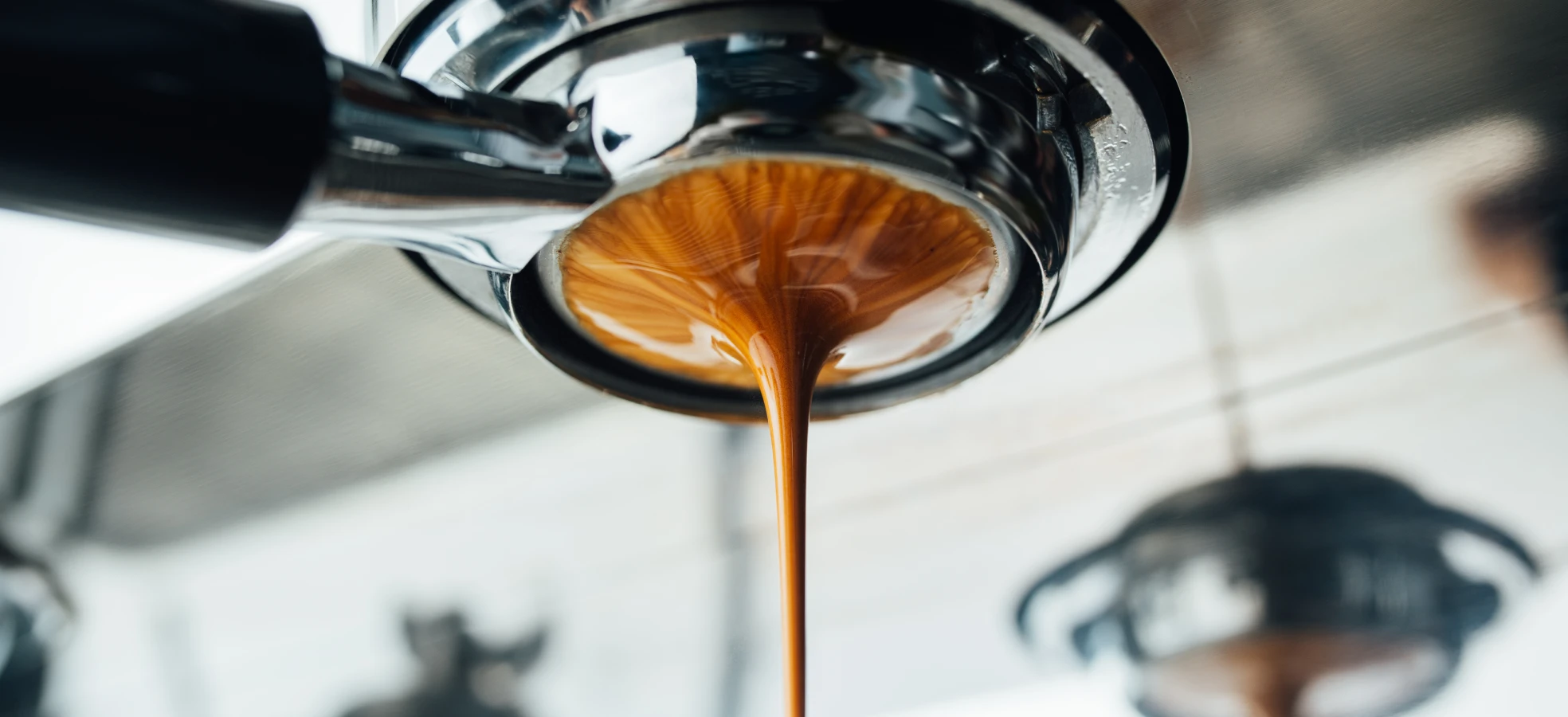
Coffee tastes sour when it is under-extracted, meaning not enough flavor has been pulled from the coffee grounds during brewing.
What Causes Sour Coffee?
Coffee extraction happens in stages:
- Acids (bright, sharp flavors)
- Sugars (sweetness)
- Bitter compounds
If brewing stops too early, only the acidic compounds are extracted, resulting in a sour or sharp taste.
Common Cause #1: Grind Size Is Too Coarse
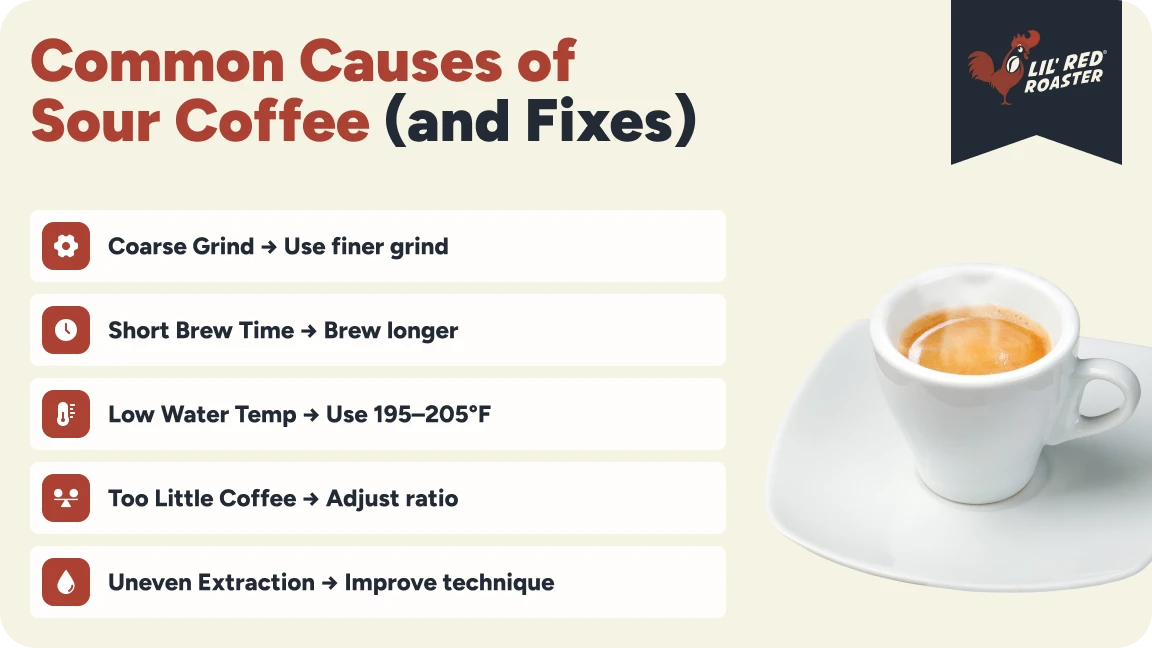
If your coffee grind is too coarse, water passes through too quickly and doesn’t extract enough flavor.
Fix:
Use a slightly finer grind to slow down extraction.
Common Cause #2: Brew Time Is Too Short
Short brew times don’t allow enough time to extract balanced flavors.
Fix:
Increase your brew time slightly to allow fuller extraction.
Common Cause #3: Water Temperature Is Too Low
Water that isn’t hot enough cannot extract the full range of coffee compounds.
Fix:
Use water between 195–205°F for most brewing methods.
Common Cause #4: Not Enough Coffee
Using too little coffee can result in weak extraction, which often tastes sour rather than balanced.
Fix:
Use a proper ratio, such as:
- 1:15 to 1:18 (coffee to water)
Common Cause #5: Uneven Extraction
If water flows unevenly through the coffee grounds, some areas may under-extract.
Fix:
Ensure even distribution and consistent pouring, especially with pour-over methods.
Sour vs Bright: Understanding the Difference
Not all acidity is bad.
Good coffee often has bright, lively acidity that adds complexity.
Sour coffee, on the other hand, tastes:
- Sharp
- Hollow
- Unbalanced
The goal is balance, not elimination of acidity.
How to Make a More Balanced Cup
To fix sour coffee:
- Grind slightly finer
- Increase brew time
- Use hotter water
- Measure coffee accurately
- Ensure even extraction
Small changes can significantly improve the flavor.
FAQ
Why does my coffee taste sour even with good beans?
Even high-quality beans can taste sour if they are under-extracted due to grind size, brew time, or water temperature.
Is sour coffee the same as acidic coffee?
No. Acidity can be desirable and add brightness, while sourness is usually a sign of under-extraction.
How do I fix sour coffee quickly?
Use a finer grind, increase brew time, or use hotter water to improve extraction.
Can water temperature cause sour coffee?
Yes. Water that is too cool prevents proper extraction and can result in sour flavors.
Does grind size affect sourness?
Yes. A grind that is too coarse leads to under-extraction and sour coffee.
Why does my pour-over coffee taste sour?
This often happens due to uneven pouring, coarse grind size, or short brew time.
Can stale coffee taste sour?
Stale coffee is more likely to taste flat or bitter, but poor extraction can still make it taste sour.
What is under-extraction in coffee?
Under-extraction occurs when not enough flavor is pulled from the coffee grounds, resulting in sour or weak coffee.
Sour coffee is typically a sign of under-extraction, not a flaw in the coffee itself.
By adjusting grind size, brew time, and water temperature, you can create a more balanced cup that highlights the full flavor of the beans.