What Is Specialty Coffee?
Specialty coffee is the highest grade of coffee, defined by quality standards, traceability, low defect counts, and flavor scores of 80 points or higher. From the farm to the roaster, every step plays a role in protecting what makes that coffee special.


What Is Specialty Coffee?
Lil Red only roasts specialty coffee. So, what exactly is “specialty” coffee?
The term specialty, when used to describe coffee, means it is the highest quality coffee possible. More specifically, it means the coffee has been scored by trained professionals for its flavor attributes and has earned at least 80 out of a possible 100 points. Established professional standards also require specialty coffee to contain fewer defects than lower coffee grades.
In simple terms, specialty coffee earns its name because exceptional care has been taken at every step to preserve the qualities that make it unique.
That care starts long before roasting. From growing and harvesting to drying, processing, shipping, and roasting, each stage affects the final cup. Specialty coffee is not just about taste after the fact. It is the result of countless decisions made correctly from beginning to end.
What Makes Coffee “Specialty”?
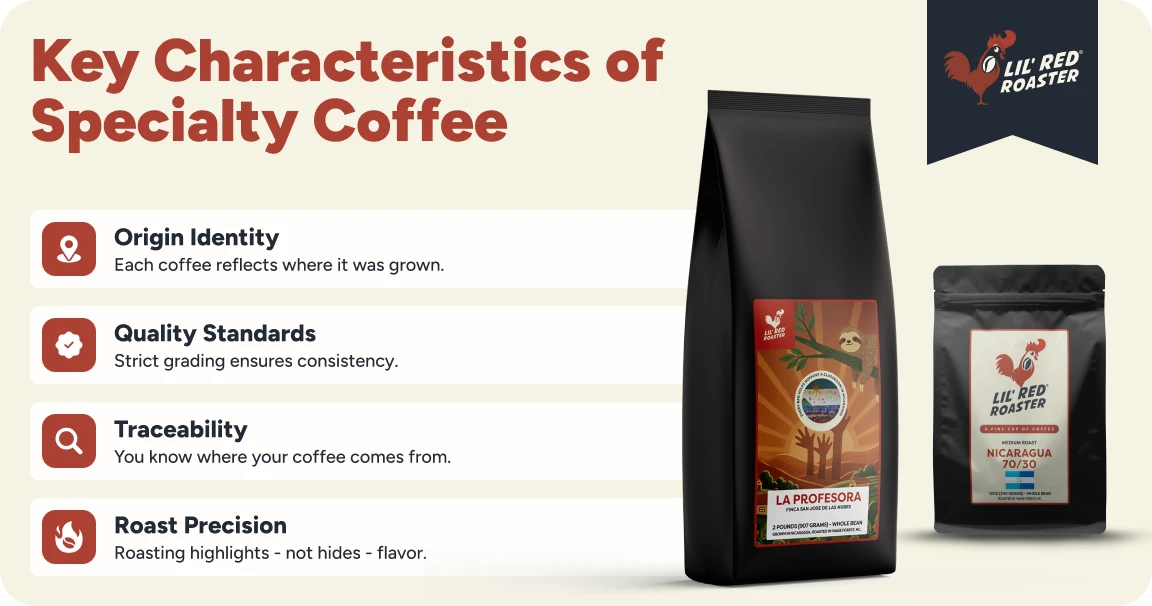
Specialty coffee stands apart because of both measurable standards and unique flavor potential.
To meet specialty grade, coffee must score at least 80 points when evaluated by trained tasters. It must also meet strict physical standards that limit the amount of defects present in the green coffee. That combination matters because it reflects both cup quality and the physical condition of the beans themselves.
Beyond scoring, specialty coffee is valued for the characteristics that make it distinctive. These can include:
- Clarity
- Sweetness
- Balance
- Acidity
- Body
- Flavor notes (reflecting where and how the coffee was grown)
This is what separates specialty coffee from more commercial-grade coffee. It is not treated like a generic commodity; it is treated like an agricultural product with a specific identity.
Growing Conditions Shape Flavor
The unique character of specialty coffee begins at origin. A coffee’s flavor is heavily influenced by its growing conditions. Soil composition, altitude, climate, shade, and the varietal of the coffee plant can all have a major impact on how the coffee develops.
These factors work together to create the flavor characteristics we perceive in the cup. That is why coffees from different farms, regions, and elevations can taste dramatically different from one another. In specialty coffee, these differences are not hidden—they are protected and highlighted.
Harvesting Requires Precision
One of the biggest differences between specialty coffee and lower-grade coffee is how carefully it is harvested.
To achieve specialty grade, coffee cherries often need to be hand-picked multiple times, usually anywhere from three to five passes, selecting only the cherries that are optimally ripe each time. That level of selectivity is labor-intensive, but it is critical to preserving quality.
If under-ripe or overripe cherries are mixed in too heavily, the consistency and flavor of the final coffee can suffer. Specialty coffee depends on careful harvesting because quality starts with selecting the right fruit at the right time.
Post-Harvest Processing Matters
After harvest, specialty coffee still has a long way to go before it is ready to roast. The cherries must be processed and dried with care, often over the course of several weeks. During that time, conditions must be monitored closely because moisture, fermentation, drying speed, and handling can all affect the coffee’s final quality.
This stage is one of the most important parts of preserving what makes a coffee special. A coffee with strong potential can lose that quality quickly if post-harvest processing is poorly managed.
Specialty Coffee Is Traceable
Unlike much of commercial-grade coffee, specialty coffee is traceable to a specific region, farm, or producer. In many cases, it can be traced even further to a particular section or plot of land on a farm.
Traceability matters because:
- It creates transparency.
- It helps preserve the identity of the coffee.
- It allows roasters and drinkers to understand the story behind the bean.
Sourcing Standards Matter Too
Specialty coffee today also involves how coffee is sourced and traded. Direct relationships and long-term partnerships between producers and roasters are increasingly common. Ethical trade practices and transparency have become expected standards because quality should not only apply to the cup, but also to the way coffee moves through the supply chain.
The Roaster’s Role in Specialty Coffee
For a coffee to be considered specialty grade, many factors must align to achieve the physical attributes and flavor characteristics required to meet specialty standards.
But it does not end there.
Roasters play a crucial role in protecting what the producer has worked so hard to create. While a roaster cannot create a specialty coffee from a low-grade one, a roaster can absolutely damage or erase the qualities that made a specialty coffee exceptional in the first place.
Our Commitment: At Lil Red, we take this responsibility seriously. We carefully select each offering and work diligently with every roast batch to highlight the best attributes that coffee has to offer. Our role is to respect the coffee, protect its character, and help it express what makes it special.
Why Specialty Coffee Matters
Specialty coffee matters because it reflects excellence at every level. It is the product of better farming, more careful harvesting, more disciplined processing, greater traceability, stronger sourcing standards, and more intentional roasting.
It offers a clearer connection between origin and cup, and it creates a better experience for people who care about flavor, craftsmanship, and quality. When you drink specialty coffee, you are experiencing the result of a long chain of expertise and care.
Final Thoughts
Specialty coffee is not just a marketing term. It is a defined grade built on quality standards, traceability, careful handling, and flavor evaluation. To be considered specialty, a coffee must meet strict physical and sensory standards.
From the farm to the roaster, every step matters. And while the journey begins with the producer, the roaster carries the responsibility of preserving what makes that coffee exceptional. That is a responsibility we are proud to carry at Lil Red Roaster.