What Is Small Batch Coffee? Why Fresh Roasting Changes Everything
Small batch coffee isn’t just marketing, it changes flavor, freshness, and quality. Here’s what it really means and why it matters.


Not All Coffee Is Roasted the Same
Most coffee people drink was roasted weeks, sometimes months, before it reached them.
But specialty roasters talk constantly about small batch roasting and freshness.
So what does that actually mean?
Understanding the difference between mass-produced coffee and small batch roasting explains why flavor varies so dramatically from one bag to another.
What “Small Batch Coffee” Means
Small batch coffee is roasted in limited quantities rather than massive industrial production runs.
Instead of roasting thousands of pounds at once, roasters produce controlled batches designed to:
- Monitor temperature precisely
- Adjust roast profile in real time
- Highlight origin flavor notes
- Maintain consistency
The goal is flavor accuracy rather than manufacturing efficiency.
Small Batch vs Commercial Coffee
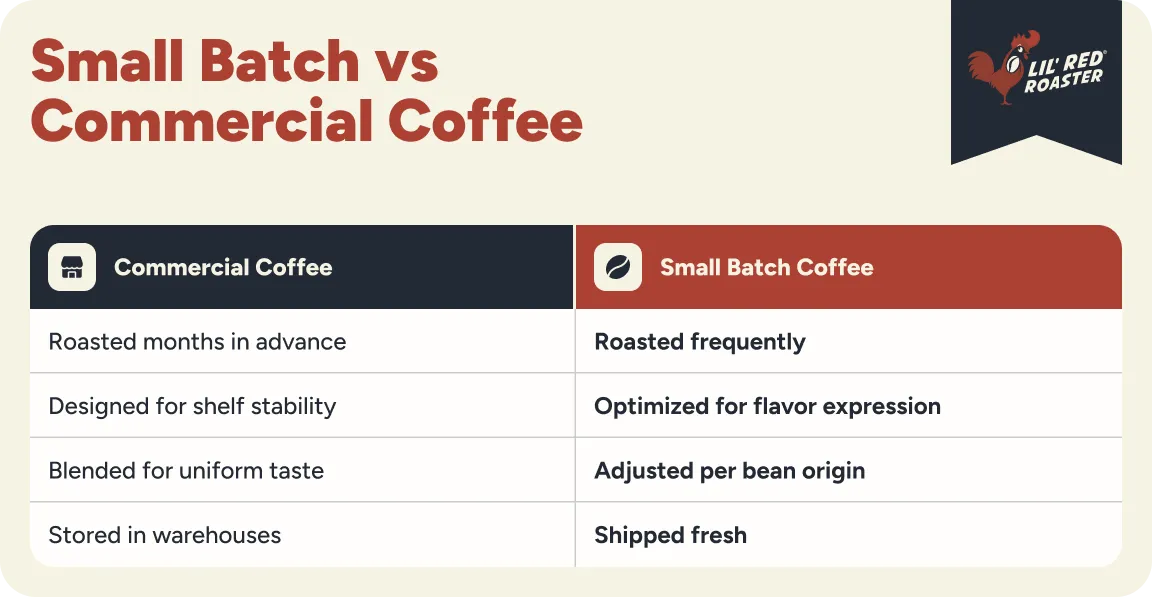
Mass production prioritizes logistics.
Small batch roasting prioritizes taste.
Why Fresh Roasting Matters
Coffee releases gases after roasting, a process called degassing.
During the first 7–21 days:
- Aromas peak
- Sweetness improves
- Balance stabilizes
- Complexity develops
After extended time, oxidation dulls flavor.
Fresh roasting preserves:
- Aromatics
- Natural sugars
- Origin characteristics
Roasted-to-Order vs Shelf Coffee
Roasted-to-order means coffee is prepared shortly before shipment rather than sitting in distribution storage.
This reduces:
- Flavor degradation
- Staleness
- Flatness
Fresh coffee doesn’t just taste stronger, it tastes clearer.
How Freshness Changes Flavor
Properly fresh coffee highlights:
- Citrus brightness in lighter roasts
- Chocolate notes in medium roasts
- Smooth body in darker roasts
Older coffee tends to taste:
- Muted
- Bitter
- One-dimensional
Fresh roasting allows individual origins to be noticeable instead of generic.
Why People Are Switching to Fresh Coffee
Consumers are increasingly choosing smaller roasters because they want:
- Traceability
- Consistency
- Better brewing results
- More interesting flavor
Coffee has shifted from commodity to craft, similar to bread, beer, and chocolate.
Small batch coffee isn’t a marketing term, it’s a different production philosophy.
By roasting in controlled quantities and shipping fresh, roasters preserve the qualities that make coffee distinctive. The result is a clearer, more balanced cup compared to mass-produced alternatives.