The Regenerative Revolution: Why Your 2026 Coffee Choice Matters for the Planet
Explore the 2026 shift toward regenerative coffee sourcing. Learn how soil health impacts flavor complexity and why regenerative agriculture is the future of specialty coffee.


Beyond Sustainability: The Year of Restoration
As we enter 2026, the coffee industry is undergoing its most significant transformation in a generation. For years, "Sustainable Coffee" was the gold standard—a promise to do no harm. But as climate change creates unprecedented challenges for traditional growing regions in Brazil and Vietnam, "doing no harm" is no longer enough. We must actively heal the land.
This is the era of Regenerative Sourcing. At Lil’ Red Roaster, we’ve spent the last year pivoting our sourcing strategy to partner with farmers who treat their land as a living ecosystem. By focusing on soil health, biodiversity, and carbon sequestration, these producers aren't just surviving the climate crisis; they are creating the most flavorful beans we’ve ever roasted.
The Science of Soil: Why Healthy Earth Means a Better Cup
Most coffee lovers know about altitude and roast profile, but few realize that the most important ingredient in their morning cup is soil microbiology. In regenerative systems, the use of synthetic fertilizers is replaced by composting and cover cropping. This creates a nutrient-dense environment that directly impacts the "cherry" (the fruit surrounding the coffee bean).
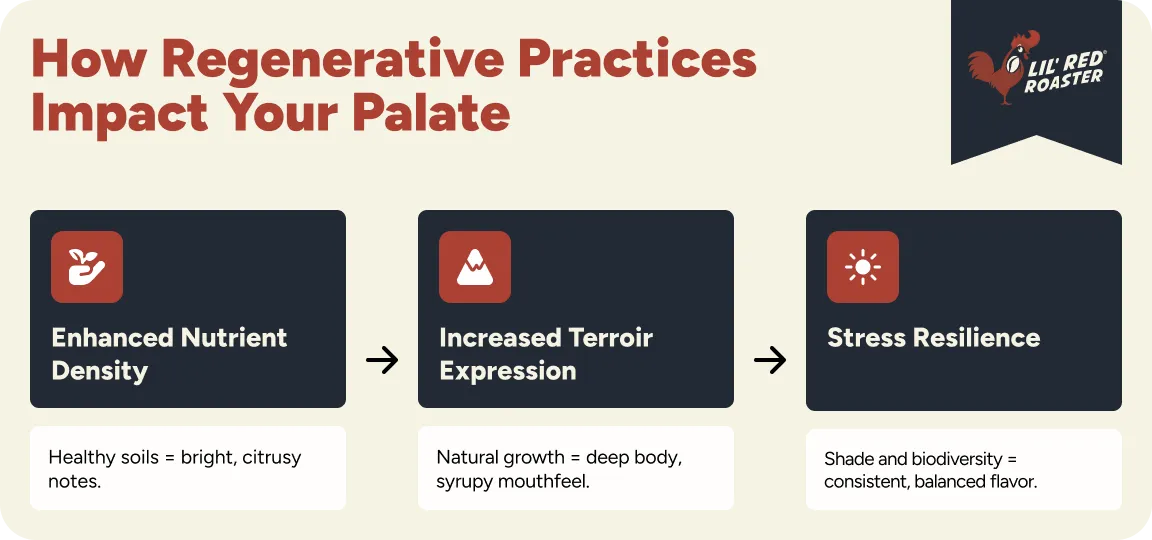
How Regenerative Practices Impact Your Palate:
- Enhanced Nutrient Density: Healthy soils teeming with beneficial fungi and bacteria allow coffee plants to absorb minerals more efficiently. This leads to Higher Acidity Clarity, producing those bright, distinct notes of citrus, hibiscus, and stone fruit that specialty drinkers crave.
- Increased Terroir Expression: When a plant isn't "force-fed" synthetic nitrogen, it relies on its local environment. This results in a Deeper Body and a more syrupy mouthfeel that is a true reflection of the specific hillside where it was grown.
- Stress Resilience: Plants grown in biodiverse ecosystems (often under a shade canopy) are less stressed by heat waves. This produces a more Uniform Ripening process, which means fewer "defects" and a more consistent, balanced flavor in every bag.
Specialty Trends to Watch in January 2026
The "New Year, New Ritual" mindset of January is the perfect time to audit your coffee setup. Here is what is defining the specialty world this year:
- Micro-Lot Transparency & Blockchain: It’s no longer enough to know the country of origin. Consumers are now using QR codes on Lil’ Red bags to see the exact farm coordinates and the "Soil Health Score" of the harvest. Transparency is the new trust.
- AI-Powered Precision Grinding: 2025 has seen the rise of "Smart Grinders." These devices can detect the ambient humidity and altitude of your kitchen to recommend the exact micron size for your specific brew method. This ensures that even at home, you’re achieving café-level extraction.
- The "Minimalist" Brew: While 2025 was about complex lattes, 2026 is the year of Black Coffee Authenticity. Drinkers are opting for light-roasts that highlight the intrinsic sugars of the bean, often served as a "Flight" to compare different regenerative origins.
Support the Future of Farming
When you choose a regenerative roast, you are participating in a global effort to sequester carbon and protect the livelihoods of smallholder farmers. It’s a choice that rewards the planet and your palate in equal measure.
At Lil’ Red Roaster, we invite you to start your 2026 with a commitment to quality. Whether you're brewing a pour-over or seeking the convenience of our partners at Capitol Coffee for your office, ensure your coffee comes from a source that gives back.
Ready to taste the revolution?
Join the Lil' Red Coffee Club and get our latest regenerative micro-lots delivered to your door.