From the Cupping Table with Master Roaster Brad: How Preshipment Samples Protect Coffee Quality
Take a behind-the-scenes look at the cupping table. Learn how Master Roaster Brad Kirby evaluates preshipment samples to ensure every coffee meets our strict standards.


Quality Is Decided Before the Coffee Reaches the Roastery
Most people meet coffee after it has been roasted, bagged, brewed, and served. As a Master Roaster, I meet it much earlier.
Before a new crop leaves its origin country, a representative green coffee sample arrives at our cupping table so the lot can be evaluated against the strict quality and flavor expectations we establish for our products. That small sample carries a massive responsibility. It gives us a chance to confirm that the coffee still belongs in our program before the full shipment begins its journey across the ocean.
For Lil Red Roaster, this is not a ceremonial tasting. It is a critical decision point. The sample must prove that the farm, mill, processing, drying, storage, and lot preparation have successfully preserved the qualities that made the coffee worth buying in the first place.

What a Preshipment Sample Actually Represents
A preshipment sample is intended to accurately represent the massive coffee lot that will soon be exported. It is normally pulled after the harvest and post-harvest processing, when the coffee has been completely dried, milled, sorted, and prepared for sale.
Because the full commercial lot is still sitting at origin, the sample gives the roaster an early view of quality and risk. It is one of the clearest ways to turn a sourcing promise into an observable, physical test.
The sample is only useful when it is handled as evidence. I always start with the physical coffee. Bean size, moisture, visible consistency, and the condition of the green coffee provide vital clues about how the lot was dried and stored, and how it may ultimately respond to heat. None of those visual measurements replaces tasting, but together they help form a disciplined starting hypothesis before the first batch ever enters the sample roaster.
Why We Use More Than One Sample Roast
A single roast can hide as much as it reveals. If the sample is roasted too aggressively, the roast character can cover up the coffee’s natural clarity. If it is roasted too lightly, the cup may remain underdeveloped and make a perfectly sound coffee seem sharp, sour, or incomplete.
Because of this, I evaluate the sample across more than one roast approach. The objective here is not to pick a final retail profile immediately; the objective is to understand the true range of the coffee.
One sample roast may emphasize fragrance, floral character, citrus, and structure. Another may show how sweetness, body, chocolate, or nut tones emerge with more development in the drum. Comparing those cups helps me distinguish a true quality signal from a simple roast artifact. It also provides an early view of how much flexibility the coffee offers when we eventually develop a full production profile.
Want to taste a coffee that passed the test? Explore La Profesora and experience a cup selected and roasted for perfect clarity and sweetness.
The Cupping Table Turns Sensory Impressions Into a Repeatable Process
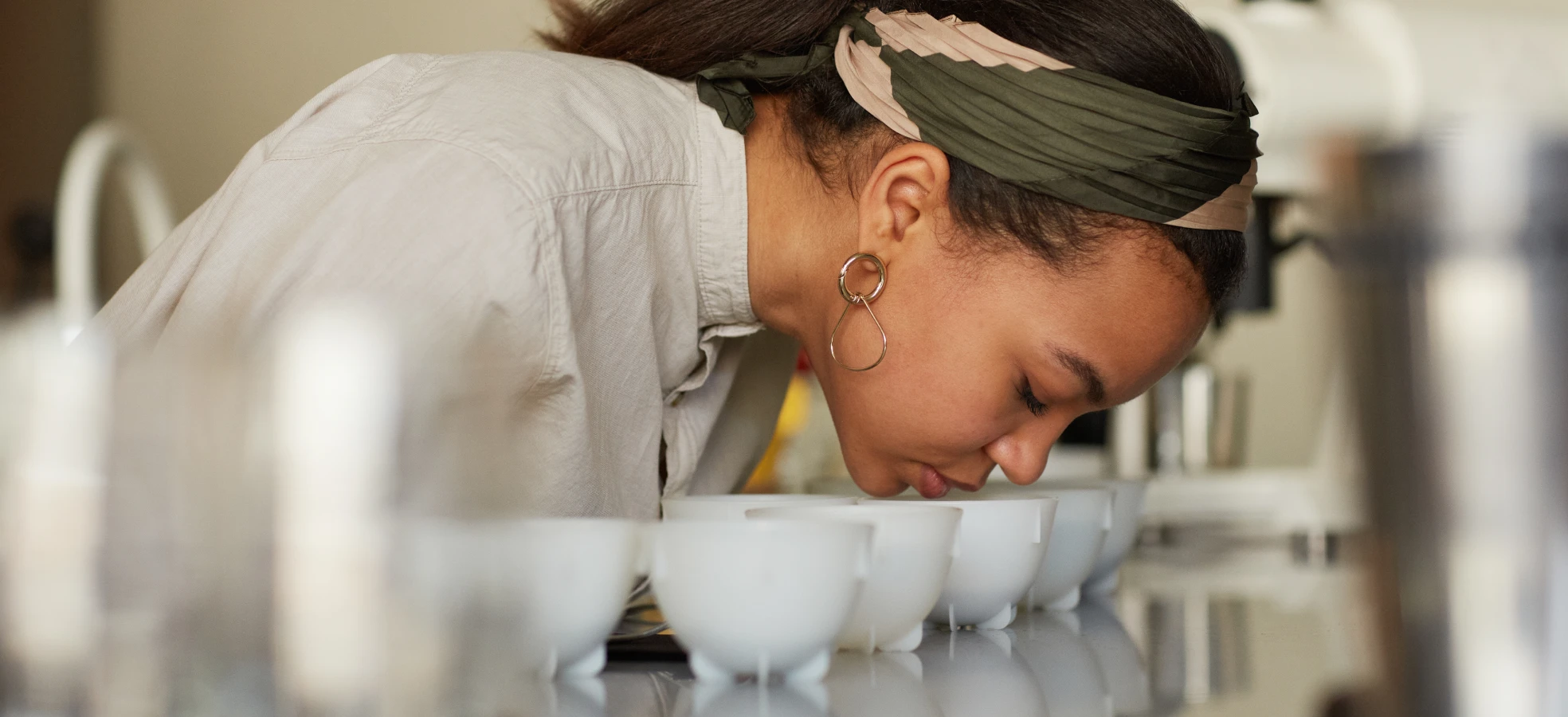
Cupping is simply structured, standardized tasting. The coffee is ground, evaluated for dry fragrance, infused with hot water, and tasted meticulously as it cools.
Temperature matters immensely because different attributes become more obvious at different points in the tasting span. Brightness and acidity may stand out early while the coffee is hot. Sweetness, texture, balance, and finish often become much easier to separate and evaluate as the cup moves from warm to cool.
At the cupping table, I pay close attention to aroma, acidity, sweetness, body, flavor, aftertaste, balance, and any microscopic sign of defect or instability. The point is not to produce a poetic list of marketing tasting notes. The point is to determine whether the coffee is clean, expressive, balanced, and consistent enough to justify approval. A note such as tangerine, wildflower honey, toasted almond, or milk chocolate is useful only when it helps communicate a repeatable sensory experience in the cup.
What the New Crop of La Profesora Showed
When we received the preshipment sample from Finca San Jose de Las Nubes for our La Profesora release, it reflected a remarkably strong growing season.
At the cupping table, I found a bright and clean citrus acidity that remained present through the entire tasting, beautifully balanced by a pronounced honey-like sweetness and a juicy mouthfeel. The cup also showed notes of toasted almond, tangerine, wildflower honey, and milk chocolate.
More important than any single descriptor was the way those attributes worked together. The coffee had energy without harshness and sweetness without feeling heavy. That result gave Lil Red the confidence to move forward—but not permission to stop evaluating.
Why This Matters for Your Morning Cup
An e-commerce product page can make any coffee sound exceptional. Our preshipment evaluation process is different because it dictates what we actually do before we ever write the description.
The product story begins with a quality decision, not with marketing language. For you, the practical benefit is total confidence. The coffee in your kitchen was not selected blindly from a spreadsheet or an importer’s generic description. It was roasted, tasted, questioned, and approved by the person directly responsible for how it will ultimately perform in your mug.
A Reliable Standard for Cafes and Offices
Wholesale accounts need more than just an interesting first cup. They need product continuity, training confidence, and a supplier who actually notices when a crop changes.
Preshipment evaluation supports that need because it creates a built-in early warning system. If a lot no longer matches the intended program, we investigate before a café, restaurant, office, or hospitality team builds an entire menu around it. It allows us to explain exactly what changed in the new crop, what remained consistent, and whether brewing guidance should be adjusted. That is the difference between simply supplying bags of beans and actively managing a premium coffee program.
The Final Approval Happens After Arrival
Preshipment approval is a major checkpoint, but it is not the final word. Once the coffee reaches the United States and enters our warehouse, we sample roast and cup it again.
This "landed sample" must confirm that the lot is still clean, stable, and perfectly aligned with the earlier evaluation. If the coffee changed during transit, our roast plan must change as well. This second check closes the loop between origin and production. It protects the farm’s hard work, the roaster’s standards, and the customer’s expectation.
Great coffee depends on many people making careful decisions at the exact right moment. The cupping table is where Lil Red makes that responsibility visible.
Frequently Asked Questions
What is a preshipment coffee sample?
A preshipment sample is a small, representative portion of green coffee sent to the buyer or roaster before the full lot ships. It allows the roaster to evaluate physical condition and cup quality while the coffee is still close to origin.
Why does Lil Red roast more than one sample profile?
Different sample roast profiles reveal different parts of the coffee. A lighter approach can expose clarity and acidity, while a more developed sample can reveal sweetness, body, and how the coffee may behave in full production.
Can a coffee change after it ships?
Yes. Time, temperature, humidity, packaging, and transit can affect green coffee. Lil Red cups the coffee again after arrival to confirm that the landed lot still performs exactly as expected.
Does cupping guarantee every cup will taste identical?
No crop and no brew is perfectly identical. Cupping creates a highly disciplined reference point so the roaster can manage natural agricultural variation and protect the intended product experience.
Explore La Profesora and experience a coffee selected and roasted to protect the character Brad found at the cupping table.