Why Every Harvest Tastes Different: Managing Crop Variation Without Losing Product Identity
Coffee changes from harvest to harvest because it is agricultural. Weather, plant health, cherry ripeness, processing, drying, storage, and transit affect the green coffee. A roaster protects product identity by evaluating each crop, adjusting the profile, and communicating meaningful changes rather than pretending every year is identical.


Coffee Is a Crop Before It Is a Product
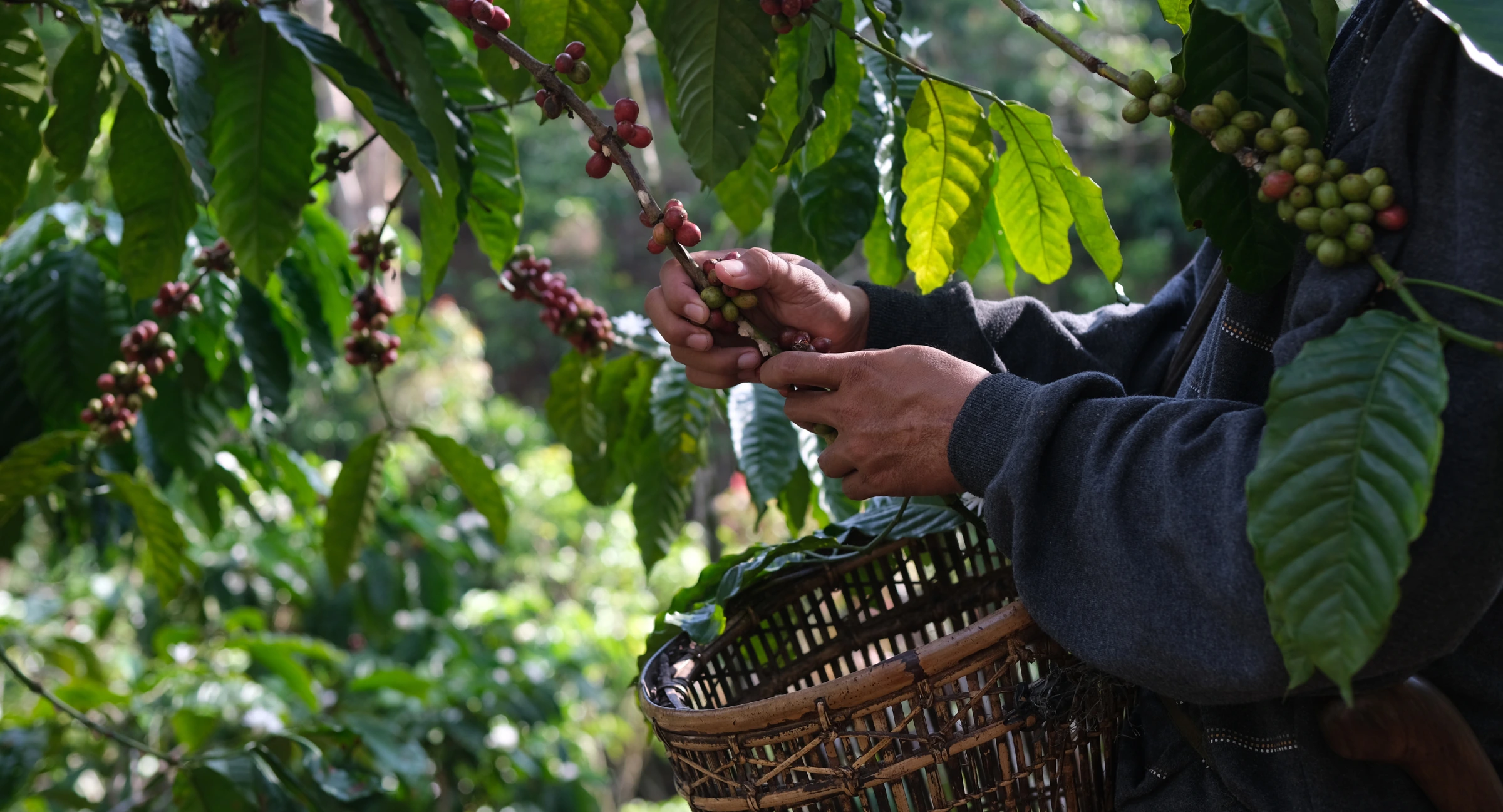
A product name can create the expectation that the contents will remain identical forever. Agriculture does not work that way. Coffee trees respond to rain, temperature, sunlight, soil, plant health, pruning, harvest timing, labor, and many other conditions. The next crop from a familiar farm can carry the same identity and still express different intensity, sweetness, acidity, or body.
That natural variation is not a flaw to hide. It is a reality to manage. Lil Red’s responsibility is to decide what must remain recognizable, what can evolve, and what needs to be communicated so the customer understands the current coffee rather than an old description.
Weather Changes Cherry Development
Rainfall affects flowering, fruit set, ripening, and harvest timing. Temperature influences how quickly the cherry develops. Shade, sunlight, and altitude shape the pace of maturation and the conditions around the plant. A balanced growing season can support sweetness and structure, while stress can reduce yield, change density, or create uneven ripeness.
Weather does not determine quality by itself. Skilled farming can mitigate risk, and difficult seasons can still produce excellent lots. The point is that each harvest begins with a new set of conditions. A careful roaster expects evidence of that season in the coffee.
Picking and Lot Separation Change the Result
Coffee cherries do not all ripen at once. Selective harvesting requires multiple passes and careful sorting. The proportion of ripe, underripe, and overripe fruit entering the process can materially affect sweetness, cleanliness, and consistency. Lot separation also matters because different plots, elevations, varieties, and pick dates may perform differently.
A farm may decide to combine lots for continuity or isolate a smaller lot for distinct quality. Those decisions influence what reaches the roaster. Product identity therefore begins with both agricultural conditions and the way the harvest is organized.
Processing and Drying Respond to the Season
Processing is not performed in a vacuum. Temperature, humidity, rain, water access, and drying capacity affect fermentation and moisture removal. A process that worked smoothly in one season may require different timing or handling in another. Producers make constant decisions to protect the coffee while working within real environmental limits.
This is one reason a process label cannot predict the entire cup. A washed coffee from the same farm can taste different when the harvest, fermentation, and drying conditions change. The method remains recognizable while the expression evolves.
Storage and Transit Continue the Story
Green coffee is still a living agricultural material in the practical sense that it continues to age and respond to the environment. Packaging, warehouse temperature, humidity, transit time, and handling can preserve or erode quality. A preshipment sample may arrive by air while the commercial lot travels by sea, which is why the landed coffee must be evaluated again.
Good logistics cannot improve a weak lot, but poor logistics can diminish a strong one. Lil Red’s quality system therefore follows the coffee beyond the farm and mill.
Consistency Does Not Mean Forcing Every Crop to Taste the Same
A roaster can try to flatten variation by roasting harder, blending aggressively, or using broad tasting language that never changes. That may create superficial sameness, but it can also remove the qualities that made the coffee valuable. A better definition of consistency is a stable standard of cleanliness, sweetness, balance, and product fit.
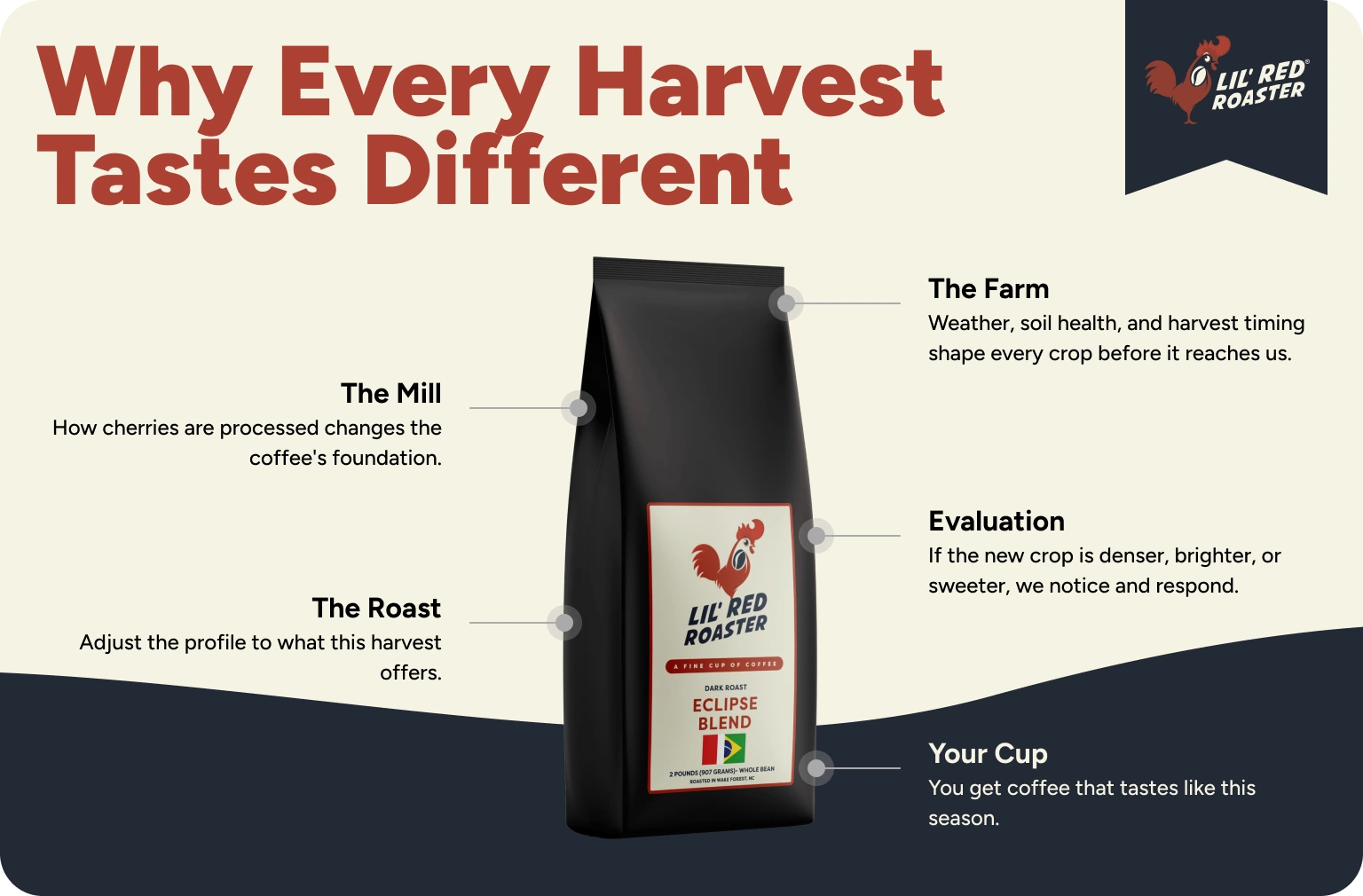
The roast profile should respond to the current crop. If the new coffee is denser, moister, brighter, or sweeter, the energy and development may change. The purpose is to protect the product promise, not to copy last year’s graph.
Product Identity Needs a Clear Center
Every recurring coffee should have a defined identity. That may include origin, relationship, process, broad flavor direction, body, and intended brew use. When a new crop arrives, the roaster compares the cup against that center. Some variation will enrich the product. Too much may require a new roast approach, a changed description, a different blend component, or a decision not to use the lot.
This framework helps both e-commerce and wholesale customers. The buyer knows what the product stands for and can also trust that Lil Red will not pretend a meaningful change did not occur.
Communication Turns Variation Into Trust
Customers are often more open to seasonal change than brands assume. They need a clear explanation. A new crop update can describe what remained familiar, what changed, and how the roaster adjusted. Wholesale accounts may need updated brew guidance. E-commerce customers may appreciate a note from Brad about the current harvest.
Coffee becomes more credible when the brand treats agriculture honestly. The goal is not perfect. The goal is a dependable standard, a recognizable identity, and enough transparency for customers to understand the cup in front of them.
How Lil Red Introduces a New Crop
Lil Red treats a new crop transition as a quality and product update: confirming the landed sample, finalizing the production profile, updating tasting notes where needed, and preparing account guidance before the previous crop is exhausted. E-commerce pages reflect the current coffee rather than automatically carrying forward last season’s language.
Wholesale accounts receive concise communication when a change is likely to be noticeable. That may include a new crop date, the main sensory continuity, the most important difference, and any recipe adjustment. The message does not need to create an alarm. It demonstrates that Lil Red noticed the change and managed it deliberately.
Over time, that history helps Lil Red understand how a farm or product has evolved, which roast changes worked, and how customers responded. It strengthens future sourcing and makes long-term relationships more valuable.
Variation Can Strengthen the Customer Relationship
Agricultural variation creates a reason to communicate with customers beyond promotions. A crop update can show how weather and harvest shaped the coffee, what Brad found at the cupping table, and how the roast was adjusted. This gives repeat customers a reason to taste attentively and helps wholesale teams explain the current product with confidence.
Lil Red keeps the story grounded without romanticizing difficult conditions or claiming that every difference is better. Credibility comes from naming what changed, why it matters, and what the roastery did. Honest seasonal communication turns variation into proof of attention.
Seasonal Identity Is a Strength of Specialty Coffee
Industrial consistency often depends on removing agricultural variation from the experience. Specialty coffee can take a different approach. It can preserve a recognizable product while allowing the current crop to be present. That seasonal identity gives customers something real to learn and gives the roaster a reason to keep evaluating rather than relying on old assumptions.
Variation Builds Credibility When It Is Managed Well
Seasonal change, handled openly, makes the product more credible and the relationship more durable.
Frequently Asked Questions
Why does coffee from the same farm taste different each year?
Weather, ripeness, plant health, processing, drying, storage, and lot selection all vary. The farm identity can remain recognizable while intensity and balance change.
Does variation mean the coffee is inconsistent?
Not necessarily. Agricultural variation is normal. Consistency means managing the change so the product remains clean, balanced, and aligned with its intended experience.
How does a roaster manage a new crop?
The roaster evaluates samples, measures physical condition, cups multiple roast approaches, adjusts the production profile, and confirms the coffee again after arrival.
Should customers expect tasting notes to change?
They may. Responsible roasters update notes when the cup changes meaningfully instead of repeating last year’s description automatically.
Sources & Further Reading
Foods - Does Coffee Have Terroir and How Should It Be Assessed?
Experience the Current Harvest
Explore Lil Red Roaster’s current coffees and taste how careful sourcing and roast adjustments protect each product’s identity from crop to crop.