Inside Foghorn Espresso with Master Roaster Brad: Building a Blend for Real Machines
Take a behind-the-scenes look at how Master Roaster Brad Kirby engineered Foghorn Espresso for perfect caramel sweetness, layered chocolate, and reliable solubility.


An Espresso Blend Is a Performance Design
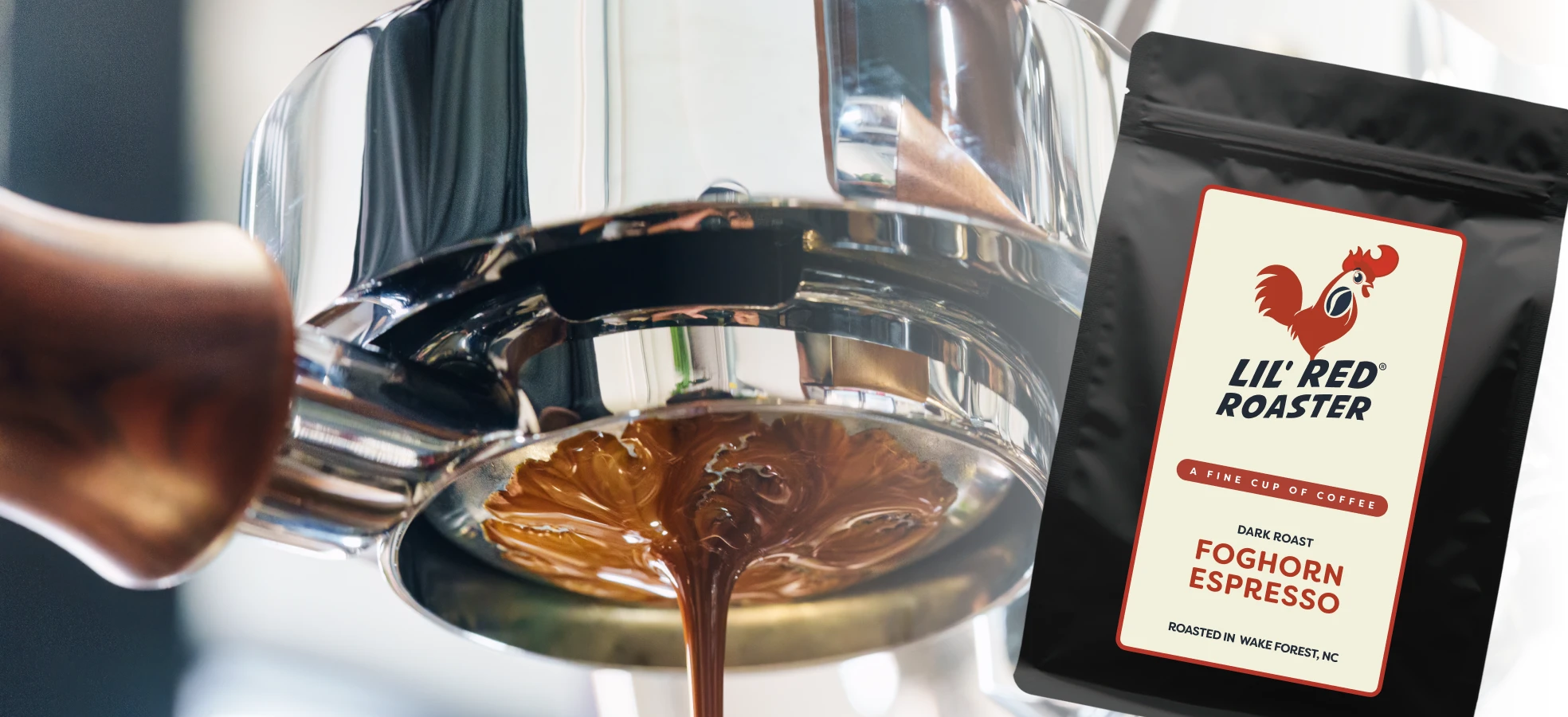
Foghorn Espresso did not begin with a desire to combine two origins just for the sake of having a blend. It began with a performance question: What would make espresso easier to extract, sweet enough to enjoy straight, strong enough to carry through milk, and flexible enough to work across the wide range of machines customers actually use?
Espresso is notoriously unforgiving because the brew happens quickly and under intense pressure. A coffee can taste excellent as a pour-over and still feel sharp, thin, or unstable when pulled as a shot. Blend design gives the roaster more than one lever to pull. Each component can contribute a distinct function, and each can be roasted according to the exact role it needs to play.
Why Brazil and Peru Work Together
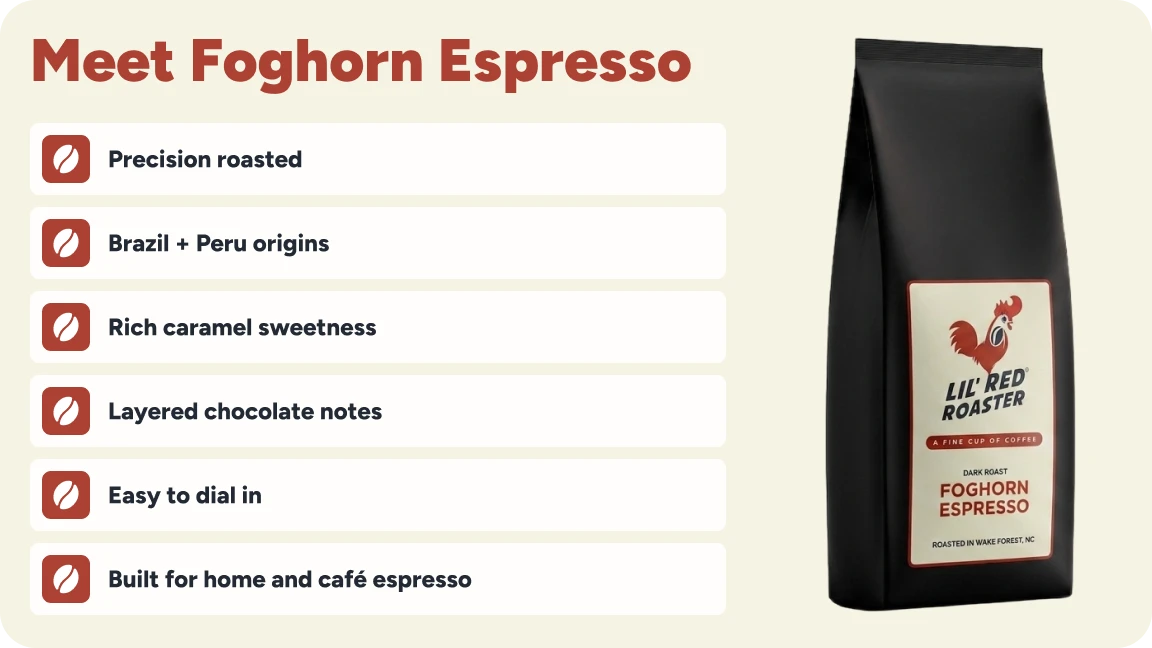
Brazilian coffees are often highly valuable in espresso for their natural sweetness, heavy body, nut character, and chocolate structure. Peruvian coffees, on the other hand, can add balance, complexity, and a completely different layer of sweetness. However, those are general tendencies, not guarantees. That is why we evaluate the actual coffees crop by crop rather than designing from origin stereotypes alone.
In Foghorn, the two components are chosen specifically to complement one another. The blend aims for a deep caramel sweetness and a progression of chocolate that moves from a creamy milk chocolate toward a more bittersweet finish. The goal is an espresso that is familiar enough for daily use, yet layered enough to remain interesting cup after cup.
Separate Roasting Protects Each Component’s Job
When different green coffees enter the roaster together, the resulting profile is always a compromise. Bean size, density, moisture, and cellular composition cause different coffees to absorb and release heat differently.
Instead of compromising, we roast the Foghorn components separately. That allows each coffee to reach the exact development needed for its role without forcing the other component to follow a path that doesn't suit it.
One profile preserves sweetness and accessible complexity. The other moves farther into development to create high solubility, heavy body, and deeper chocolate notes. Blending them after roasting gives us ultimate control over the final cup and makes the design much easier to adjust when a new crop arrives.
Solubility Is the Technical Center of Espresso
Espresso extraction is incredibly short. Water has limited time to dissolve the compounds that create sweetness, acidity, texture, and aroma. If the coffee is too resistant to extraction (low solubility), the shot can taste sour, thin, or incomplete. While a highly skilled barista with a commercial machine may compensate by tweaking temperature, grind, ratio, or pressure, most home and office users need a coffee that offers a reasonable operating window.
We use precise roast time, heat application, and airflow to develop Foghorn for practical solubility. That does not mean roasting it until the coffee loses its identity and tastes burnt. It means creating enough internal development that a wide range of machines can easily extract its natural sweetness without requiring extreme settings or endless troubleshooting.
Controlled Acidity Makes the Blend More Versatile
Acidity is essential to coffee, but the espresso process concentrates it. An acidity that feels lively and bright in a drip coffee can feel unpleasantly aggressive when compressed into a 1-ounce shot. We manage Foghorn so its acidity supports the structure without becoming the dominant experience. The target is balance, not the total absence of brightness.
That balance matters immensely in milk. Milk adds sweetness, fat, and volume. An espresso that is too delicate will simply disappear, while one that is overly bitter will dominate and clash. Foghorn’s caramel and chocolate structure is intended to remain crystal clear in a latte or cappuccino without turning the drink harsh.
How Foghorn Should Taste
The blend is built entirely around caramel sweetness and layered chocolate. The early impression should feel approachable, with a distinct milk chocolate quality and enough body to feel complete on the palate. As the shot cools, a more bittersweet chocolate note can appear, adding depth without leaving a dry or burnt finish. The cup should feel beautifully coherent rather than split between unrelated components.
(Note: Tasting notes are directional, not flavored ingredients. Foghorn does not contain actual caramel or chocolate syrup. Those words describe familiar sensory associations naturally created by the coffee seed and the roast.)
A Starting Point for Dialing In
Foghorn is designed to be forgiving, but it is not automatic. Water chemistry, grinder quality, basket size, machine temperature, and bean freshness still matter.
Espresso Starting Point:
- Use a measured dose appropriate for your specific portafilter basket.
- Begin near a 1:2 beverage ratio (e.g., 18 grams of dry coffee yielding 36 grams of liquid espresso).
- Target a balanced shot time (typically 25-30 seconds) based on your machine and grinder capabilities.
- Adjust your grind size before changing several variables at once.
- Taste for sweetness, structure, and finish rather than chasing a specific number alone.
The best approach is to choose a reasonable recipe, weigh your input and output, taste the result, and make one single change at a time. Consistency comes from controlled variables.
A Blend for Home, Café, Hospitality, and Office Use
Home customers need a coffee that rewards learning without punishing every small variation. Cafés need rock-solid repeatability through intense morning rushes. Hospitality teams need a flavor profile that appeals broadly and survives milk-based service. Offices need a bean that performs just as well in an automatic bean-to-cup machine as it does in a traditional setup.
Foghorn was built with those real-world conditions in mind. The story is not just that Brazil and Peru taste good together. The real story is that we designed the components, roast development, and final balance around the way espresso is actually prepared and consumed every day.
Brew Foghorn the way it was designed. Shop Foghorn Espresso and use our dialing-in guidance to build a sweeter, more consistent shot.
Wholesale & Office Inquiries: Contact Lil Red Roaster to bring Foghorn to your cafe, restaurant, or break room.