Water Is Most of the Cup: How Water Quality Changes Coffee Extraction
Water changes coffee because dissolved minerals help extract flavor compounds and alkalinity buffers acidity. Learn how to test and treat your water for the perfect cup.


Coffee Is Mostly Water
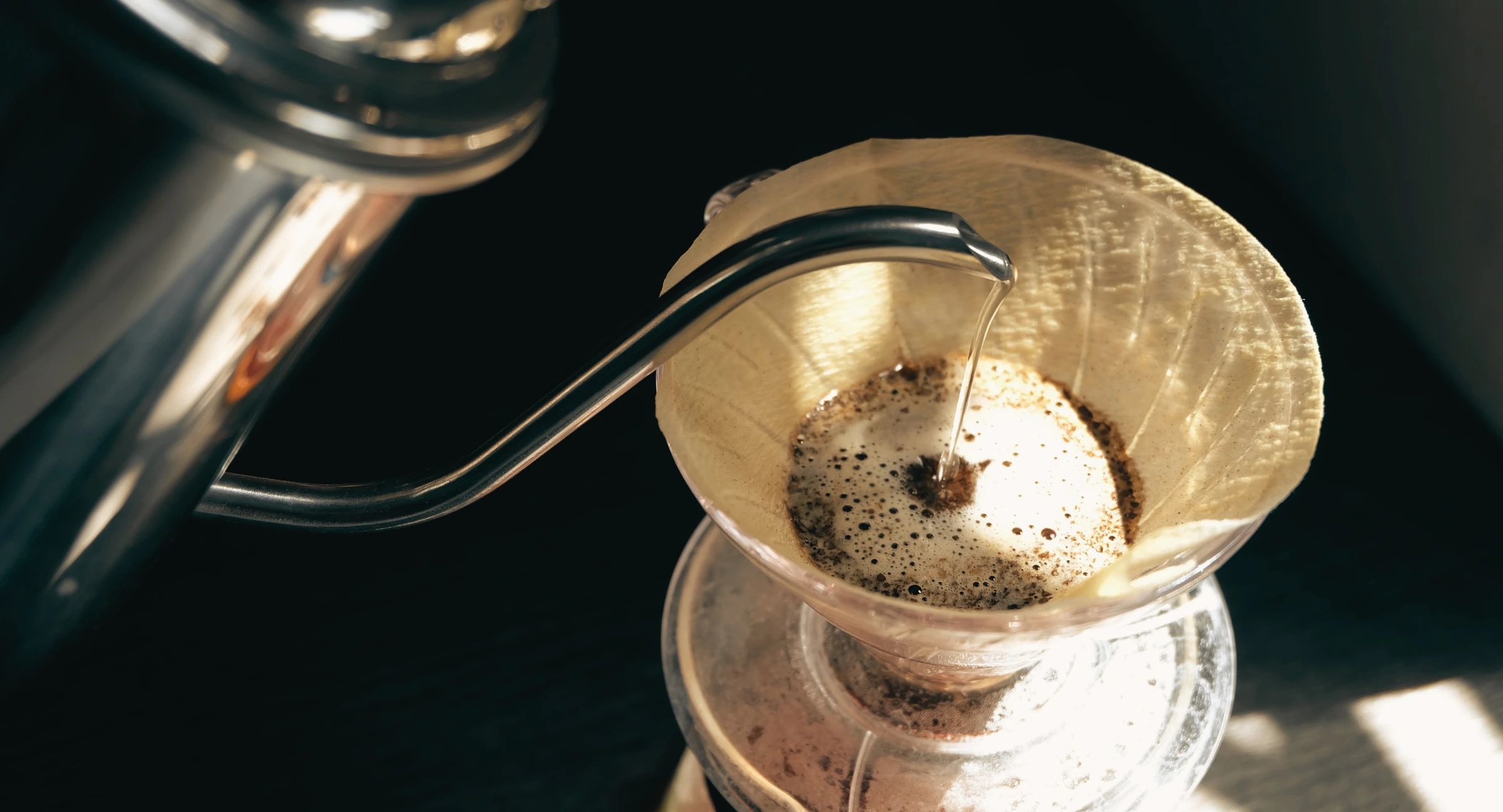
A roaster can select an exceptional coffee and build a careful profile, but the beverage in the cup is still mostly water. That makes water an ingredient, not a neutral delivery system. Its mineral content, alkalinity, hardness, odor, and treatment affect what dissolves from the grounds and how the final cup tastes.
The same coffee can taste bright and sweet in one location, flat in another, and harsh in a third even when the recipe and equipment appear identical. Water is often the hidden variable. Home brewers may blame the coffee. Commercial teams may blame the machine. The correct first step is to test the water.
Minerals Help Extract Flavor
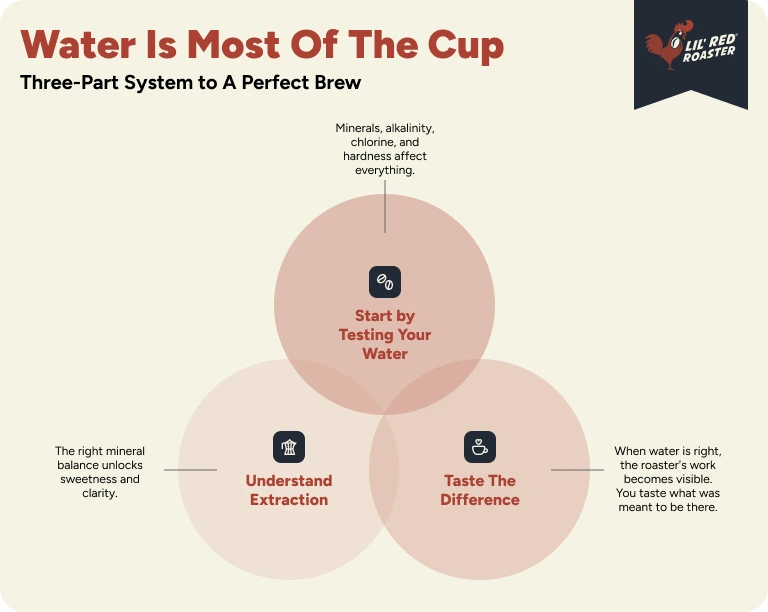
Brewing water contains dissolved minerals that interact with coffee compounds. Calcium and magnesium are often discussed because they influence extraction and perceived flavor. Water with almost no mineral content may struggle to produce the same structure and clarity as balanced brewing water. More minerals are not automatically better, however.
Very hard water can create heavy extraction, muted character, and scale inside equipment. The goal is not maximum mineral content. It is a balanced environment that helps the coffee express sweetness, acidity, body, and aroma without overwhelming the cup.
Alkalinity Controls How Acidity Is Experienced
Alkalinity describes the water’s capacity to buffer acids. Coffee naturally contains acids that contribute brightness, fruit, and structure. If alkalinity is very high, those acids can be neutralized to the point that the coffee tastes flat or dull. If alkalinity is extremely low, acidity may feel sharp, thin, or unstable.
This is why pH alone does not tell the whole story. Two water samples can have similar pH and behave differently because their buffering capacity is different. Commercial beverage programs should look at alkalinity and hardness together rather than relying on a basic taste test alone.
Chlorine and Odor Can Override the Coffee
Municipal water treatment protects public health, but chlorine or chloramine can create noticeable taste and aroma in brewed coffee. Water may also carry sulfur, iron, sediment, or other local characteristics. A coffee cannot overcome a dominant water defect. The beverage will carry the problem into every cup.
Carbon filtration can reduce many taste and odor issues, but the correct system depends on the incoming water. One filter does not solve every condition. A water analysis and equipment review should come before a treatment purchase.
Water Also Protects or Damages Equipment
Hard water can create scale in heating elements, boilers, valves, and lines. Scale reduces efficiency, changes temperature performance, restricts flow, and can shorten equipment life. Water that is overly aggressive or poorly balanced can create different corrosion concerns. Flavor and maintenance therefore belong in the same water strategy.
For offices, cafés, restaurants, and hotels, the cost of a poor water decision can appear as service calls, downtime, inconsistent temperature, and premature replacement. A filtration system should be sized and maintained for actual volume and local conditions.
Why Multi Location Brands Struggle With Water
A recipe developed at one location may fail at another because the water source changes. One city may have soft water, another may have high alkalinity, and a third may rely on seasonal or blended sources. If the company standardizes coffee and equipment but ignores water, the customer experience will drift.
Multi-location programs need a water specification and a testing process. The treatment equipment may differ by market, but the target brewing environment should remain consistent enough to protect the brand experience.
A Practical Water Review
Water Review Checklist
- Taste and smell the incoming water
- Test hardness, alkalinity, and total dissolved solids
- Identify chlorine, chloramine, iron, sulfur, or sediment concerns
- Review equipment manufacturer requirements
- Choose treatment based on local data and beverage volume
- Create a cartridge replacement and testing schedule
This review should happen before a new machine is installed and whenever flavor or maintenance changes unexpectedly. Water conditions can shift, filters can exhaust, and bypass settings can be altered. Ongoing quality control is more reliable than assuming the system is working because it is present.
Better Water Makes the Roaster’s Work Visible
Lil Red develops coffees to express particular sweetness, acidity, body, and balance. Water determines how much of that work reaches the customer. Good water does not add a flavor. It creates the conditions for the coffee to show what is already there.
That is why water belongs in product support, office coffee planning, hospitality training, and multi-location quality control. The bag is only one part of the system. The final cup is the result of coffee, water, equipment, recipe, and people working together.
How Water Strategy Changes by Environment
A home brewer may need only a clean tasting filter and a simple test kit. A café with boilers, steam, high-volume brewing, and expensive equipment needs a more engineered solution. A hotel or restaurant group may need different treatment at each property to reach a common target. The right level of complexity should follow the risk and volume of the operation.
Operators should also understand the tradeoff between flavor and protection. Aggressive scale prevention that removes nearly all mineral content may protect some equipment while producing a weak cup or creating compatibility concerns. In other cases, insufficient treatment may preserve flavor temporarily while allowing damaging scale to build. The solution should balance beverage quality, equipment requirements, local water, and maintenance capacity.
Lil Red can add value by coordinating the conversation. The roaster understands the intended flavor. The equipment provider understands the machine. The water professional understands local treatment. A strong program brings those perspectives together instead of asking one vendor to guess outside its expertise.
For commercial programs, documenting test results, treatment settings, replacement intervals, and service responsibilities alongside the coffee recipe makes future troubleshooting and training easier. It also protects the program when staff or vendors change.
A Home Test Can Reveal Whether Water Is the Problem
Home brewers can run a simple comparison before investing in a treatment system. Brew the same coffee with the same measured recipe using local tap water, a trusted filtered water, and a suitable bottled water with moderate mineral content. Taste the cups side by side as they cool. A clear difference suggests that water deserves more attention.
This test is not a substitute for measurement, but it helps isolate the variable. Avoid distilled water unless it is appropriately remineralized, and do not assume every bottled water is better. Some are extremely hard or alkaline. The best result comes from water that tastes clean, supports extraction, and fits the equipment.
Test Water Before Installing New Coffee Equipment
When a new brewer or espresso machine is selected, water testing should happen before installation. Treatment capacity, bypass, drain requirements, filter access, and maintenance responsibilities should be considered as part of the site plan. Solving water after equipment develops scale or the coffee tastes wrong is more expensive than including it in the original plan.
A Water Standard Makes Troubleshooting Easier
A documented water standard helps multi-location teams compare results across sites and make evidence-based adjustments.
Frequently Asked Questions
Can tap water make good coffee?
Yes, if it tastes clean and has a mineral balance that supports extraction without excessive alkalinity or hardness. Local water should be tested before choosing treatment.
Is distilled water good for coffee?
Distilled water lacks the minerals normally used in extraction and can produce a flat or unusual cup. It may also be unsuitable for some equipment without remineralization.
What does alkalinity do in coffee water?
Alkalinity buffers acids. Too much can mute brightness and make coffee taste flat, while too little can make acidity feel sharp and unstable.
Why does water matter to equipment?
Hardness can create mineral scale in boilers and heating systems. The right filtration strategy supports both flavor and equipment protection.
Sources & Further Reading
Specialty Coffee Association. Water and Coffee Acidity
Build a Better Coffee Setup From the Water Up
If water quality is affecting flavor or equipment, talk with Lil Red Roaster about the coffee, brewing setup, and support your program needs.