Hot Coffee vs. Cold Brew: When Is It Actually Time to Make the Fall Switch?
Hot coffee or cold brew in the fall? Learn how extraction and temperature change flavor, which brew fits unpredictable autumn weather, and when to make the switch.


Fall is arriving.
At least that's what the calendar says.
The problem? It's 54 degrees when you leave the house, 78 by lunch, and suddenly the simple act of ordering coffee requires the kind of decision-making usually reserved for buying a used car.
Hot coffee vs. cold brew in the fall isn't really about following a date on the calendar. It's about the weather, the coffee you're drinking, and - most importantly - what sounds good to you.
Around here, we're not interested in enforcing coffee rules.
But we do know a thing or two about what happens when coffee gets hot, cold, iced, steeped and occasionally forgotten on the counter.
So, when should you actually make the switch?
Let's settle this.
Hot Coffee vs. Cold Brew: They're Not Just Different Temperatures
First things first: cold brew isn't simply hot coffee that got cold.
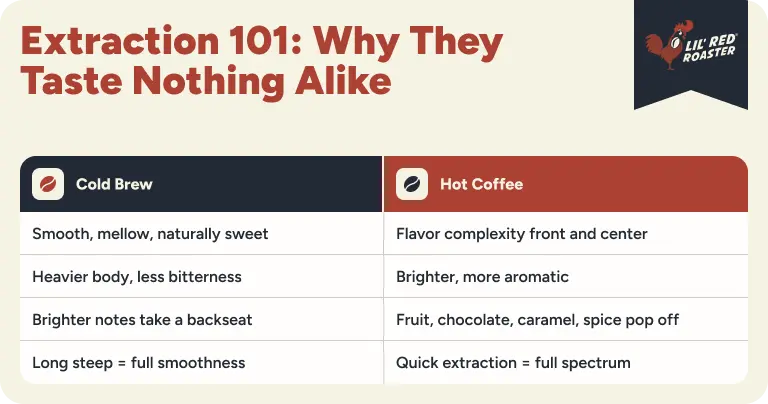
Hot brewing uses heat to extract the soluble compounds in roasted coffee relatively quickly. Cold brew typically uses cool or room-temperature water and a much longer steep.
That difference in extraction changes what you experience in the cup.
Hot coffee tends to put aroma and flavor complexity front and center. Depending on the bean and roast, that can make fruit, chocolate, caramel, nuts, spice and other tasting characteristics easier to notice.
Cold brew often presents as smooth, mellow and naturally sweet, with a heavier body and less emphasis on some of the brighter characteristics you'd notice in a hot cup.
Neither one is the "better" way to drink coffee.
They're just doing different jobs.
And that's good news, because fall can't seem to decide what job it wants to do either.
The Official Lil' Red Fall Coffee Forecast
We considered consulting meteorologists.
Then we remembered we roast coffee.
So here's the completely unofficial - but surprisingly practical - Lil' Red Fall Coffee Forecast.
80°F+ - Cold brew. Obviously.
If you're sweating while walking to your car, nobody needs to prove anything.
65–79°F - Iced coffee territory.
The leaves may be changing. Your coffee doesn't have to.
50–64°F - Dealer's choice.
This is peak fall indecision. Hot in the morning. Iced by lunch. We support both decisions.
Below 50°F - Get the mug.
The season has spoken.
Is this scientifically validated?
Absolutely not.
But neither is putting a decorative pumpkin on your porch September 1st, and that hasn't stopped anybody.
Why Hot Coffee Just Feels Different in Fall
There is something about that first genuinely cool morning.
You walk outside. The air has changed. Somebody in the neighborhood is already burning leaves - or possibly breakfast - and suddenly an iced coffee doesn't hit quite the same.
A hot cup gives you something cold brew can't: warmth as part of the experience.
And because aroma plays such a large role in how we experience coffee, drinking it hot can make those familiar fall-friendly characteristics particularly enjoyable.
Think:
- Chocolate
- Caramel
- Toasted nuts
- Molasses
- Baking spice
- Rich fruit
- Brown sugar
In other words, a lot of the flavors that already feel right at home when the weather cools down.
No pumpkin syrup required.
But Don't Put the Cold Brew Away Yet
Here's where we defend the person who orders iced coffee while wearing a jacket.
We see you.
Cold coffee doesn't suddenly become illegal when September ends.
In fact, coffees with chocolate, nutty, caramel or fruit characteristics can be fantastic cold. The colder serving temperature and different extraction method simply create a different experience.
Cold brew is especially useful during the Southeast version of fall, otherwise known as:
"Why did I wear this sweater?"
Those warm fall afternoons are exactly why we're not interested in declaring a single official switch date.
Drink according to conditions.
Or don't.
You're an adult.
Does the Same Coffee Taste Different Hot and Cold?
Absolutely.
And this is where the debate gets more interesting.
Take a coffee with chocolate, caramel and fruit characteristics. Brew it hot and you may notice more aroma and distinction between individual flavors.
Turn that same coffee into cold brew and the experience can become rounder, smoother and more unified.
That's one reason experimenting with brew methods is worth doing.
You don't necessarily need ten different bags of coffee to create ten different experiences.
Sometimes you just need to stop brewing the same bag the same way every morning.
Lil' Red rule: Before deciding you don't like a coffee, try changing how you brew it.
That's a lot cheaper than blaming the beans.
What Coffee Works Best for Fall?
There isn't one roast level officially assigned to autumn.
We checked.
But cooler weather naturally makes richer, more comforting flavor profiles appealing.
If that's what you're after, medium and dark roasts can deliver the chocolate, caramelized and fuller-bodied characteristics many people associate with a cozy cup.
That doesn't mean light roast drinkers have to abandon ship until spring.
A quality light roast can bring sweetness, fruit and complexity that works beautifully on a crisp morning.
The better question isn't:
"What roast am I supposed to drink in fall?"
It's:
"What sounds good right now?"
That's generally a better way to buy coffee anyway.
Try the Same Coffee Two Ways
Here's our challenge.
Choose one Lil' Red coffee and make it two different ways this fall.
First, brew it using your normal hot method—drip, pour-over, French press, whatever gets you moving in the morning.
Pay attention to the aroma, body and flavors you notice.
Then try that same coffee iced or as a cold brew.
Taste it again.
You may be surprised by how different the same beans can feel.
And if you're interested in understanding why different brew methods call for different preparation, check out our guide to [what grind size to use for different coffee brewing methods].
See?
Coffee education.
We snuck it right in there.
Hot Coffee vs. Iced Coffee vs. Cold Brew
Before somebody sends us an email, let's clarify one thing:
Iced coffee and cold brew aren't necessarily the same thing.
Iced coffee generally begins as coffee brewed with hot water and then chilled or brewed directly over ice. That preserves more of the characteristics associated with hot extraction while giving you a refreshing cold drink.
Cold brew takes another route.
Coffee grounds steep in cool or room-temperature water for an extended period before being filtered. The result is typically smooth, rich and mellow.
So your fall decision actually has three contestants:
Hot coffee: Maximum cozy.
Iced coffee: Hot-coffee character without the hot-coffee temperature.
Cold brew: Smooth operator.
Choose accordingly.
So When Should You Actually Switch to Hot Coffee?
Here is the deeply unsatisfying but correct answer:
Whenever you want.
Coffee doesn't need more rules.
That's part of what we believe at Lil' Red. Great coffee should be approachable. It should bring people together. Quality matters—but enjoying quality coffee shouldn't require a vocabulary test or permission from somebody wearing a leather apron.
Fall is a perfect example.
Maybe your switch happens on the first 50-degree morning.
Maybe you drink iced coffee through December.
Maybe you're the person who orders cold brew while there's snow on the ground.
We have questions.
But we respect the commitment.
The important part isn't whether the coffee is hot or cold.
It's whether it's good.
And that part we take seriously.
Find Your Fall Coffee
Whether you're reaching for a steaming mug before sunrise or refusing to surrender your cold brew until Thanksgiving, start with coffee worth drinking.
Explore Lil' Red's lineup of small-batch roasted coffees and find one that works both sides of the forecast.
Because great coffee should feel as good as it tastes.
And fall is too short to drink boring coffee.
Frequently Asked Questions
Is cold brew stronger than hot coffee?
It depends on the coffee-to-water ratio and how the finished drink is served. Cold brew is often prepared as a concentrate, which can make it stronger than a standard cup when consumed without dilution. Don't assume "cold brew" automatically means more caffeine—preparation matters.
Is cold brew less acidic than hot coffee?
Cold-brew extraction can produce a cup that tastes smoother and less sharply acidic than some hot-brewed coffees. Bean origin, roast level, grind, water and brewing method all affect the final result, so it's better to think of cold brew as often perceived as smoother rather than universally "low acid."
Can I use the same coffee beans for hot coffee and cold brew?
Yes. In fact, brewing the same coffee both ways is a great way to experience how extraction and temperature change flavor. Experiment before deciding which method you prefer.
Is iced coffee the same as cold brew?
No. Iced coffee is generally brewed hot and then chilled or brewed over ice. Cold brew is steeped using cool or room-temperature water for an extended period, creating a different extraction and flavor profile.
When should I switch from iced coffee to hot coffee for fall?
Whenever you want. Weather and personal preference matter more than the calendar. Lil' Red's unofficial recommendation: once mornings consistently drop below 50°F, the hot mug starts making a pretty convincing argument.