How to Evaluate a Coffee Roaster or Supplier Beyond Price Per Pound
A strong coffee supplier should be evaluated on product quality, consistency, freshness, sourcing transparency, equipment fit, recipe support, training, service response, data, and total program cost. Price per pound matters, but it does not capture waste, downtime, weak adoption, or customer dissatisfaction.


Price Per Pound Is Only One Line in the Cost
Coffee buyers need cost discipline. The mistake is assuming the lowest product price creates the lowest program cost. A cheap coffee that employees avoid, guests reject, staff overuse, or equipment struggles to brew can create more waste and less value than a higher quality product with better support.
A supplier evaluation should therefore examine the full system. Product, roasting, delivery, equipment, water, training, service, freshness, and communication all affect the outcome. Price matters most when the buyer knows what the price includes and what problems remain outside it.
Evaluate the Green Coffee and Sourcing Standard
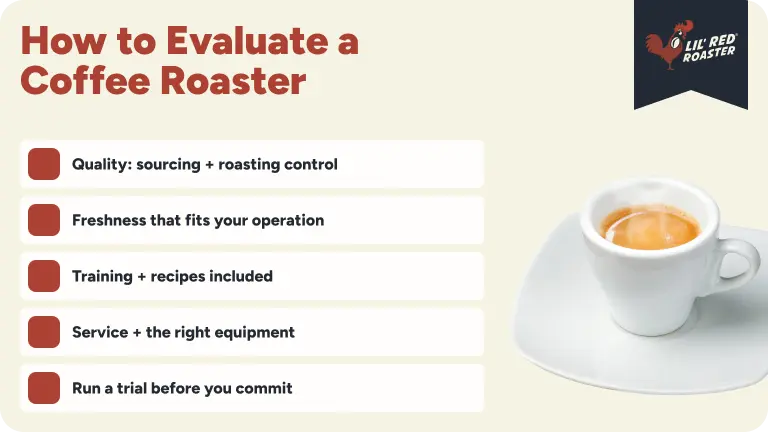
Ask how the roaster selects coffee. Does the supplier evaluate physical quality, sample roast, cup new lots, and manage crop transitions? Can the team explain origin, processing, traceability, and why a coffee belongs in the program? A credible supplier should be able to discuss quality without hiding behind vague premium language.
The objective is not to demand a rare single-origin for every use. It is to understand whether product decisions are deliberate. A broad appeal blend can be excellent when it is designed and maintained with the same discipline as a limited release.
Ask How Roasting Is Controlled
Roasting consistency requires more than owning a machine. Ask how profiles are developed, how batches are monitored, how physical changes in green coffee are handled, and how finished coffee is tasted. A roaster should know when to repeat a profile and when the current crop requires an adjustment.
For espresso or automatic equipment, solubility and roast development need specific attention. For batch coffee, the product should remain balanced at the intended volume and holding time. The supplier should match the coffee to the application rather than assuming one roast works everywhere.
Freshness Needs a Practical Definition
Freshness is not a slogan and it is not one universal day count. Espresso, retail shelves, batch brewing, and high-volume programs have different operating needs. Ask how the supplier manages roast scheduling, packaging, inventory, delivery frequency, and product rotation. The system should prevent both chronic staleness and unnecessary emergency orders.
A strong supplier will help the buyer establish par levels and ordering cadence based on real usage. That reduces waste and protects quality without creating an unrealistic just in time burden.
Training and Recipes Are Part of the Product
If staff do not know how to measure, grind, brew, clean, and hold the coffee, the product cannot perform. Ask what training is included, how new employees are supported, and whether recipes are documented by equipment. A tasting at the sales meeting is not enough.
The best training is usable under real conditions. It should be clear, short, repeatable, and connected to manager checks. The supplier should also have a way to respond when the recipe stops working because water, equipment, or the coffee changed.
Service Response and Equipment Fit Matter
Coffee equipment creates operational dependency. A machine failure can stop service, frustrate employees, or remove a menu category. Ask who owns preventive maintenance, emergency response, parts, filters, and communication. If the supplier does not provide service directly, the handoff to the service partner should still be clear.
Equipment recommendations should fit volume, menu, labor, water, counter space, and customer expectations. A supplier who begins with the machine they want to sell rather than the program you need is solving the wrong problem.
Measure the Total Program
Supplier Evaluation Scorecard
- Coffee quality and fit
- Roast and lot consistency
- Freshness and delivery discipline
- Training and recipe support
- Water and equipment guidance
- Service response and accountability
- Traceability and transparency
- Waste, adoption, and customer satisfaction
- Total cost, not product cost alone
The weighting should reflect the environment. A high-volume hotel may prioritize uptime and training. A retailer may prioritize product story, packaging, and repeat purchase. An office may prioritize adoption and ease of use. The scorecard should make those priorities explicit before proposals are compared.
Run a Structured Trial Before a Full Commitment
A trial should test the product in the real environment. Define the coffee, equipment, recipe, training, delivery schedule, service expectations, and feedback method. Taste across several days and shifts. Review usage, waste, staff confidence, and customer response. A single perfect sample prepared by the supplier does not prove the program will work.
The right supplier should welcome that discipline. Lil Red’s value is not limited to a price per pound. It is the ability to connect sourcing, roasting, brewing, training, and service into a coffee experience the customer can trust and the operator can manage.
The Best Supplier Relationship Improves Over Time
A coffee supplier should become more valuable as the relationship develops. Usage data should improve ordering cadence. Staff questions should improve training. Equipment history should improve preventive maintenance. Customer feedback should improve assortment. Crop experience should improve product transitions. If the relationship produces no learning, the buyer is receiving transactions rather than partnership.
Contracts and service expectations should make accountability visible. Delivery windows, substitution rules, equipment responsibilities, response times, training scope, price review, and exit terms should be understood before a problem occurs. Clarity protects both parties and reduces the chance that routine friction becomes a damaged relationship.
Buyers should also evaluate cultural fit. Does the roaster answer questions directly? Does the team admit when a coffee changed? Can the supplier support the organization’s growth without forcing unnecessary complexity? Does the supplier treat frontline staff with the same respect shown to executives during the sale? Those behaviors predict the quality of the operating relationship.
The final decision should connect product and system. A great coffee with weak support may fail. Excellent service with a poor product may create convenience without value. The strongest supplier combines coffee quality, operational discipline, and a willingness to solve the real customer need.
How to Compare Proposals Fairly
Coffee proposals should be normalized before the buyer chooses. Compare the same expected volume, delivery frequency, equipment assumptions, service scope, training, filtration, accessories, and contract term. A low coffee price paired with separate service fees or excessive minimums may not be lower in total. A higher price that includes training and reliable maintenance may create more value.
Ask each supplier to identify assumptions and exclusions. Then score the proposals against the operating priorities established before the process began. This reduces the chance that a persuasive tasting or a single discount controls a decision that will affect employees, guests, and staff every day.
The Decision Should End With a Clear Operating Plan
After selecting a supplier, document the launch. Confirm products, pricing, equipment, water, training, delivery, service contacts, success measures, and review dates. A signed agreement without an operating plan leaves the most important work unresolved. The supplier relationship begins when the program starts performing, not when the proposal is accepted.
Turn the Supplier Decision Into a Working Program
That operating plan should be reviewed after launch so product quality, service performance, usage, waste, customer response, and future purchasing decisions can improve with evidence over time.
Frequently Asked Questions
What questions should I ask a wholesale coffee roaster?
Ask how coffee is selected, how crop changes are managed, what roast and quality controls are used, how recipes and training are supported, and how service issues are handled.
Is the lowest price per pound usually the lowest cost?
No. Weak quality, waste, offsite purchases, equipment downtime, poor training, and lost customer confidence can make a lower priced product more expensive in practice.
Should a supplier provide equipment?
Some do and some do not. The important issue is whether the supplier can recommend equipment that fits volume, menu, labor, water, and service requirements instead of forcing one standard package.
How should I test a new supplier?
Use a structured trial with defined products, recipes, staff training, service expectations, feedback, and success measures. A casual tasting alone does not test program performance.
Sources & Further Reading
Specialty Coffee Association - Coffee Standards
Specialty Coffee Association - What Is Specialty Coffee
Choose a Coffee Partner, Not Just a Price
Talk with Lil Red Roaster about coffee quality, training, equipment fit, service expectations, and the complete program you need.
Start a Coffee Program Conversation