5 Coffee Trends We're Taking Into 2027, and a Few We're Leaving Behind
Lil' Red looks at the coffee trends headed into 2027, from origin stories to fruitier cups, and the ones we're happy to leave behind.



Predicting coffee trends is a dangerous business.
People have very strong feelings about what belongs in a cup of coffee.
We know because we're some of them.
But with 2027 around the corner, the coffee world is giving us some pretty good clues about what's coming next.
Fruit is showing up in unexpected places. People want to know more about where their coffee comes from. Specialty coffee keeps becoming less "special occasion" and more everyday routine.
And somewhere, somebody is probably still telling you that you're drinking your coffee wrong.
So we've looked at some of the biggest predictions for coffee in 2027 and decided which ones we're bringing along.
And which ones can stay right where they are.
1. IN: Coffee That Tastes Like Somewhere
One of the biggest food trends predicted for 2027 has a fancy name: terroir.
It really means something pretty simple.
Where something comes from affects how it tastes.
Soil. Climate. Elevation. Growing conditions. Processing.
Whole Foods Market's newly released 2027 Trends Report predicts growing consumer interest in provenance and products that communicate a distinct sense of place. The report specifically points to single-origin coffee as an example.
Coffee people have been talking about origin for a long time.
What's changing is that more everyday consumers are interested too.
We like that.
A coffee from Nicaragua shouldn't have to taste exactly like one from Ethiopia, Colombia or Sumatra.
Those differences are part of what makes coffee interesting.
OUT: Making people take a geography exam before they're allowed to enjoy it.
We'll tell you where your coffee came from.
We'll tell you why that matters.
Then we'll let you drink the thing.
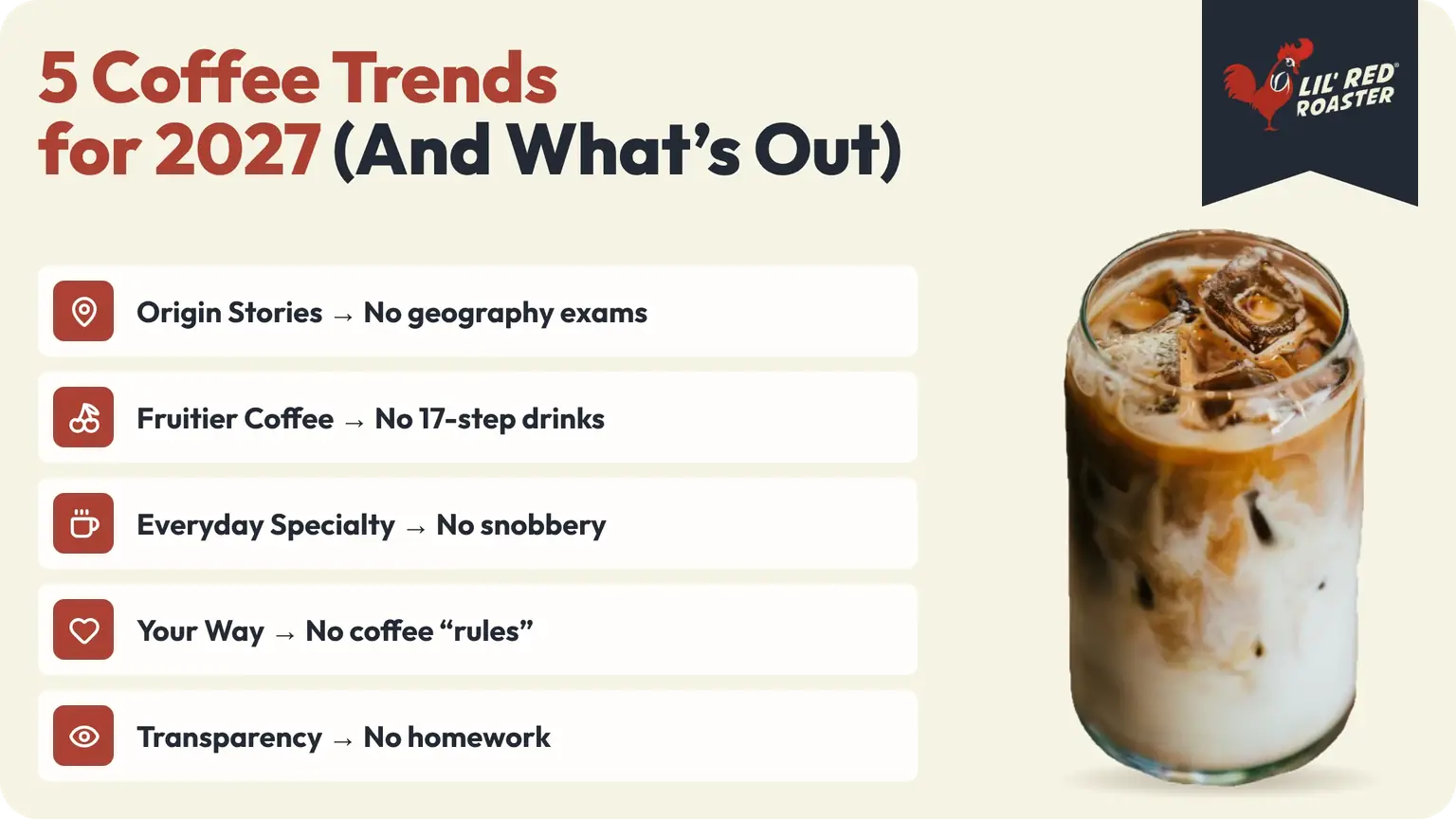
2. IN: Fruitier Coffee
Here's one we weren't necessarily expecting to become a headline.
2027 might get juicy.
Nestlé USA's newly released 2027 forecast predicts fruit-forward coffee will become significantly more prominent next year. Social conversation around fruit-flavored coffee has increased more than 23% over the past year, while searches for banana bread lattes reportedly jumped more than 6,000%.
Yuzu americanos.
Blueberry lattes.
Cherry espresso tonics.
Banana-inspired coffee drinks.
Coffee has always contained natural fruit characteristics. Berry, citrus and stone fruit notes can occur naturally depending on the coffee and how it's processed.
Now people are getting more adventurous about bringing those flavors front and center.
We're here for experimentation.
OUT: Adding seventeen ingredients just because TikTok told you to.
Sometimes the interesting flavor is already in the bean.
3. IN: Specialty Coffee Becoming Regular Coffee
For years, "specialty coffee" sounded like something you needed special equipment, special vocabulary and possibly a special mustache to understand.
That's changing.
The National Coffee Association's 2026 consumer research found specialty coffee consumption at record levels, with younger adults particularly engaged in the category.
The interesting part isn't that everyone suddenly became a coffee expert.
It's that better coffee became normal.
That's a trend we hope continues straight through 2027.
People should expect freshly roasted coffee.
They should care about quality.
They should be curious about what they're drinking.
They just shouldn't need a certification to order it.
OUT: Coffee snobbery.
We've said it before.
We'll probably say it again.
We take making coffee seriously.
You don't have to take drinking it seriously.
4. IN: Drinking Coffee However You Want
Hot coffee.
Iced coffee.
Cold brew.
Espresso.
Cream.
No cream.
Morning.
Afternoon.
Apparently even at a job interview, although the internet had some opinions about that one.
Coffee culture keeps expanding because people keep finding new ways to make coffee fit into their lives.
That's a good thing.
Coffee doesn't need more rules.
OUT: "You're not supposed to drink it that way."
We respectfully decline.
Unless you're pouring it directly into your shoe.
Then we might have some follow-up questions.
5. IN: Knowing More Without Making Coffee Harder
This might be the 2027 trend we're most excited about.
Consumers increasingly want transparency.
Where did this come from?
Who made it?
What's in it?
Why does it taste this way?
Whole Foods' 2027 forecast points toward both provenance and simpler products, two trends that share an important idea: people want to better understand what they're buying.
Coffee brands should make that easier.
Not harder.
Tell people where the coffee comes from.
Explain what the tasting notes mean.
Help them understand the roast.
Give them enough information to choose something they'll enjoy.
Then get out of the way.
OUT: Turning every bag of coffee into homework.
Nobody wants homework before breakfast.
So What Does Coffee Look Like in 2027?
Hopefully?
Really good.
A little more adventurous.
A little more transparent.
A little more connected to where it came from.
And considerably less interested in telling you how you're supposed to enjoy it.
Trends will come and go.
There will be a new drink everyone suddenly needs to try.
There will be flavors nobody saw coming.
And there will inevitably be something on the internet that starts an argument.
We're good with all of it.
Because the part that matters isn't particularly trendy:
Find coffee you like. Make it well. Share it with good people.
We'll take that trend into any year.
Seriously good coffee. Without taking ourselves too seriously.
FAQ
What are the biggest coffee trends for 2027?
Early 2027 forecasts point toward greater interest in coffee origin and provenance, fruit-forward flavors, specialty coffee and more adventurous ways of enjoying coffee.
What is terroir in coffee?
Terroir describes how a coffee's growing environment, including geography, climate and soil, can influence its characteristics and flavor.
What is fruit-forward coffee?
Coffee naturally can have fruit-like tasting characteristics, including citrus, berry and stone fruit. Fruit-forward drinks can also pair coffee with ingredients such as cherry, yuzu or blueberry.
Is specialty coffee becoming more popular?
Yes. Specialty coffee consumption has reached record levels in recent National Coffee Association research.