Washed, Natural, Honey, and Fermented Coffees: How Processing Shapes Flavor
Coffee processing describes how the seed is separated from the coffee fruit and dried. Washed coffees often emphasize clarity and acidity, natural coffees often show fruit and fuller body, and honey coffees often sit between them. Fermentation choices can further change aroma and flavor, but execution matters more than the process name alone.


Processing Begins After the Cherry Is Picked
Coffee begins as a fruit. The seed that becomes roasted coffee sits inside layers of skin, pulp, mucilage, parchment, and silverskin. Processing is the set of decisions used to separate that seed from the fruit and reduce moisture to a stable level for storage and export. Those decisions influence the chemistry and sensory potential that later reach the roaster.
Process names are useful because they give buyers a first clue, but they are often oversimplified. Washed does not automatically mean bright. Natural does not automatically mean fruity. Honey does not mean honey was added. Fermented does not automatically mean wild or funky. The process creates conditions. The farm and mill still have to manage those conditions carefully.
Washed Coffees Often Emphasize Clarity
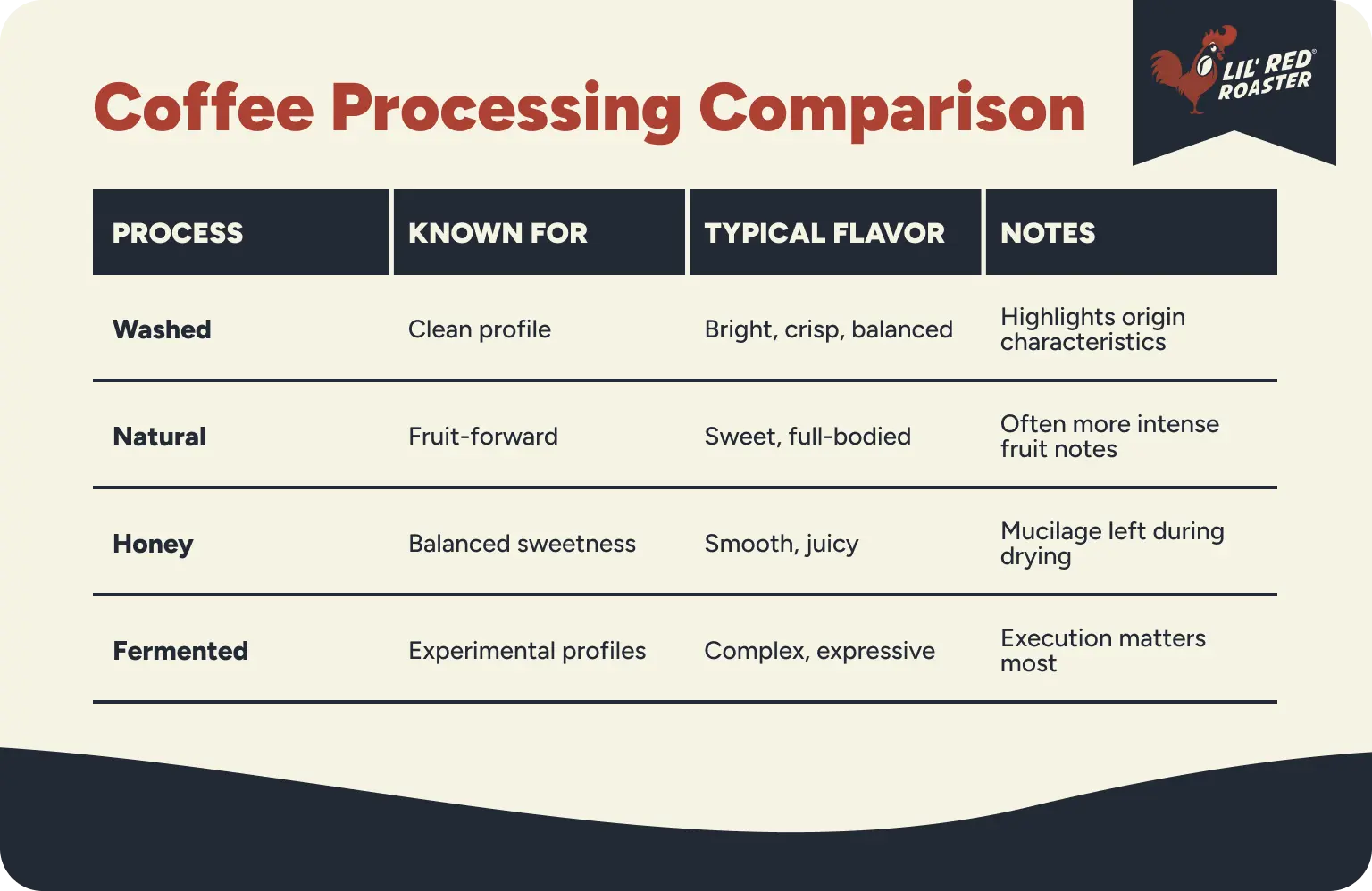
In a washed process, the outer skin and much of the fruit are removed soon after picking. Remaining mucilage is broken down through fermentation or mechanical removal, and the coffee is washed before drying. Because the seed spends less time drying inside the whole fruit, the cup can present a cleaner separation of acidity, sweetness, and origin character.
Well executed washed coffees often appeal to drinkers who value floral notes, citrus, tea like structure, and a transparent finish. They can be especially compelling in pour over and flash brewed iced coffee. Poorly managed washing or fermentation can still create defects, which is why the label describes a method rather than a quality guarantee.
Natural Coffees Dry Inside the Fruit
Natural processing leaves the cherry intact during drying. The seed remains in contact with the fruit for a longer period, and fermentation continues as moisture leaves the cherry. When drying is controlled, the result can show pronounced fruit, sweetness, complexity, and fuller body. When control is weak, the coffee can become uneven, overfermented, sour, or unstable.
Natural coffees can be memorable because the process often creates a strong sensory signature. Berry, tropical fruit, wine like, and jammy associations are common, but not universal. The roaster must decide how much of that character to preserve and how much development the coffee needs for balance.
Honey Processing Occupies a Broad Middle Ground
Honey process coffee is depulped but dried with some mucilage still attached. The amount of mucilage, drying depth, turning frequency, climate, and terminology vary by country and producer. Labels such as yellow, red, or black honey may signal different process choices, but they are not perfectly standardized across every origin.
In the cup, honey coffees can combine some of the clarity associated with washed coffee and some of the sweetness and body associated with natural coffee. That makes the method attractive to customers who want fruit and texture without the most intense fermented expression. Again, execution is the deciding factor.
Controlled Fermentation Expands the Toolbox
Fermentation has always been part of coffee processing. The newer change is the degree of control and intentionality. Producers may manage time, temperature, oxygen, vessel, microbial activity, or sequence to influence how the coffee develops. Terms such as anaerobic, carbonic, or inoculated fermentation describe parts of the process, but the details matter more than the headline.
Controlled fermentation can produce distinctive aroma and flavor, including spice, tropical fruit, confectionery, or wine like notes. It can also overwhelm variety and origin when the process becomes the dominant signal. Lil Red evaluates these coffees by cup quality and balance, not by the novelty of the method name.
Research Confirms That Processing Changes the Coffee
Published metabolomic and sensory research has found meaningful differences among washed, natural, and honey processed coffees. Different methods change both volatile and nonvolatile compounds, which helps explain why coffees from the same general origin can taste different after processing. The science supports what experienced producers, roasters, and tasters observe in practice.
That does not mean a buyer can predict every cup from a label. Variety, growing conditions, ripeness, fermentation, drying, storage, roasting, water, and brewing all interact. Processing is one important layer in a larger system.
How Customers Should Use Process Information
If you enjoy clarity, floral character, and structured acidity, start with a washed coffee. If you enjoy fruit intensity and fuller body, explore natural coffees. If you want sweetness and texture with more restraint, a honey process may be a useful starting point. Use those directions as a discovery tool, not a rigid rule.
Product pages should still describe the actual coffee. The process name becomes useful when it is connected to the sensory experience and brew recommendation. That is how education improves purchase confidence instead of adding jargon.
How Commercial Buyers Should Use Process Information
For cafés, restaurants, hotels, retailers, and offices, processing can help create assortment. A washed coffee may serve the customer seeking clarity and black coffee performance. A natural or controlled fermentation coffee may create a distinctive limited feature. A balanced honey coffee may bridge broad appeal and origin interest.
The supplier should also explain consistency and availability. Some highly distinctive lots are limited and change more from crop to crop. A strong program sets expectations honestly and uses the processing story to support service, not to distract from cup quality.
Process Language Should Support Honest Merchandising
Processing information can increase product interest, but it should not become a shortcut for exaggerated claims. A natural coffee should not be marketed as intensely fruity if the cup is actually restrained. An anaerobic label should not replace a clear explanation of taste. Product copy should begin with what the coffee delivers, then use the process to explain part of why that result may exist.
This approach is especially important for wholesale teams. Staff should be able to explain the process in one or two accurate sentences and connect it to the customer experience. Overly technical language can create distance, while oversimplified language can create false expectations. The best education is precise enough to be credible and simple enough to be remembered.
Process comparisons can also help customers understand how fruit contact and drying choices influence the cup. Tasting a washed and natural coffee from the same region can help customers and employees learn how fruit contact and drying choices influence the cup. Guided comparisons create stronger understanding than definitions alone.
How Roasting Interacts With Processing
Processing creates sensory potential, but roast development decides how that potential appears in the cup. A highly fruit-driven natural may need enough structure to prevent fermentation character from becoming loose or overwhelming. A delicate washed coffee may need a profile that protects floral aroma and clarity. A dense honey coffee may require a different energy approach to build sweetness evenly.
A skilled roaster does not force every process into one flavor template. The stronger approach is to identify the most valuable attributes, determine the intended brew method, and create a profile that makes those attributes accessible. That is where processing knowledge becomes a practical roasting decision rather than a label on a product page.
The Best Process Is the One That Creates Value in the Cup
Processing is valuable when it creates a clean, stable, and compelling coffee that fits the producer’s resources and the buyer’s market. The most fashionable method is not automatically the most responsible or the most delicious. Lil Red celebrates innovation while keeping the cup, the producer, and repeatable quality at the center of the decision.
Frequently Asked Questions
What is washed coffee?
Washed coffee is depulped and the remaining mucilage is removed before drying, often through controlled fermentation and washing. The method can support clarity and a more transparent expression of acidity when executed well.
What is natural process coffee?
Natural coffee is dried inside the whole fruit before the dried layers are removed. It often produces fuller body and pronounced fruit character, although results depend heavily on careful drying and fermentation control.
What is honey process coffee?
Honey process coffee is depulped but dried with some mucilage remaining on the seed. It can combine clarity with added sweetness and body, depending on how much mucilage remains and how the coffee is dried.
Is one process always better?
No. Quality depends on the coffee, climate, equipment, drying, fermentation, storage, and execution. Process names describe a method, not a guaranteed quality level.
Sources & Further Reading
Foods — Does Coffee Have Terroir and How Should It Be Assessed?
Taste How Processing Shapes the Cup
Explore Lil Red Roaster’s coffees and compare flavor, origin, and roast to find the profile that fits your palate.