Coffee Flavor Notes Explained
Coffee tasting notes don’t come from added flavors. Here’s how beans naturally produce chocolate, citrus, and other tastes.



Coffee Doesn’t Contain Added Flavors
Many people assume coffee tasting notes are artificial, that chocolate or citrus flavors are added after roasting.
In reality, those flavors already exist inside the bean.
Coffee flavor notes describe naturally occurring characteristics created by the plant, the environment it grew in, and how it was roasted.
What “Flavor Notes” Actually Are
Flavor notes are reference points used to describe familiar tastes detected in coffee.
They do not mean ingredients were added.
Instead, they reflect:
- sugars developed during roasting
- organic acids inside the bean
- aromatic compounds released during brewing
The brain recognizes these compounds as familiar foods.
Why Coffee Can Taste Like Chocolate
Chocolate notes usually come from caramelized sugars and balanced bitterness formed during roasting.
Beans grown at certain elevations develop deeper sugar structures that, when roasted, resemble cocoa flavors.
This produces:
- smooth body
- mild sweetness
- low sharp acidity
Why Some Coffees Taste Fruity or Citrusy
Fruity notes come from natural acids inside the coffee seed.
Higher altitude coffees tend to produce brighter acidity, which the brain interprets as:
- citrus
- berry
- apple
These coffees are not flavored, they simply preserve more of the bean’s original characteristics.
Where Nutty and Caramel Flavors Come From
Nutty flavors develop when sugars brown during roasting.
This is similar to how bread crust, toasted nuts, and baked goods develop aroma and sweetness.
These notes often appear as:
- almond
- hazelnut
- caramel
- toffee
Why the Same Coffee Tastes Different to Different People
Flavor perception depends on experience.
The brain identifies familiar patterns, so one person may say “brown sugar” while another says “graham cracker.”
Both can be correct, the compounds overlap.
Roast Level Changes Flavor Expression
Roasting doesn’t add flavor; it reveals different ones.
- Lighter roasts highlight origin characteristics
- Medium roasts balance sweetness and body
- Darker roasts emphasize roast-developed notes
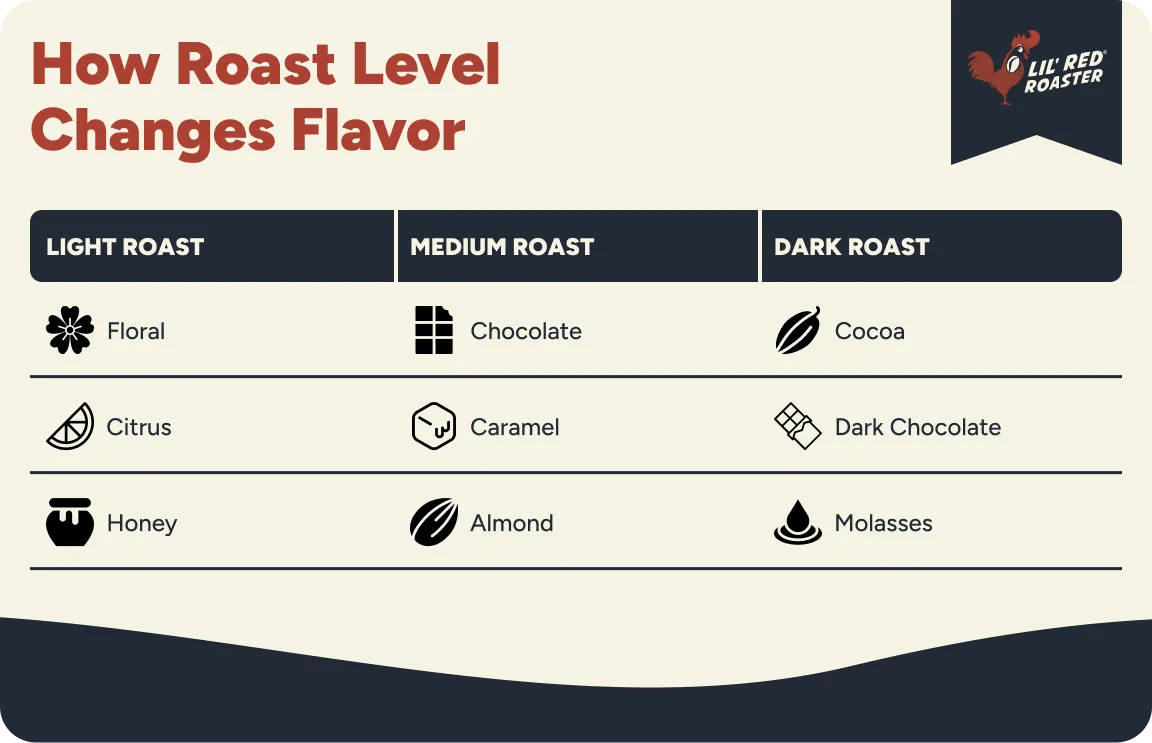
The bean stays the same, but the expression changes.
Why Tasting Notes Matter
Tasting notes help people choose coffee based on preference instead of guessing by origin or roast alone.
They act as a guide rather than a guarantee, helping drinkers explore flavors they enjoy.
Coffee flavor notes describe naturally occurring characteristics created by the plant and roasting process. Chocolate, citrus, and nutty flavors are not additives but recognizable patterns formed from sugars, acids, and aromatics.
Understanding them makes selecting coffee less random and more intentional.