Master Roaster Brad Demystifies Caffeine: What Roast, Brew Method, and Species Actually Change
Stop choosing your coffee based on caffeine myths. Master Roaster Brad Kirby explains how roast level, brewing method, and bean species actually affect the caffeine in your cup.


Why Caffeine Myths Sound So Convincing
Caffeine questions often begin with a flavor judgment. A dark roast tastes stronger, so people naturally assume it contains more caffeine. A light roast looks less developed, so others assume the caffeine has not been burned away. Espresso tastes highly concentrated, so it must deliver the most caffeine.
Each claim contains a tiny piece of logic, but none accounts for the full brewing system.
When evaluating coffee, I start with a simpler principle: compare equal things. Roast color, bean volume, bean weight, beverage volume, and serving size are not interchangeable metrics. A scoop of dark roast does not weigh the same as a scoop of light roast. A two-ounce espresso is not the same serving as a twelve-ounce brewed coffee. Once the comparison is normalized, most dramatic roast claims become much smaller.
Caffeine Is Relatively Stable Through Normal Roasting
Caffeine is more thermally stable than many aroma and flavor compounds in coffee. Normal roasting changes moisture, mass, volume, cell structure, color, and solubility, but it does not create a simple line where lighter coffee always contains meaningfully more caffeine.
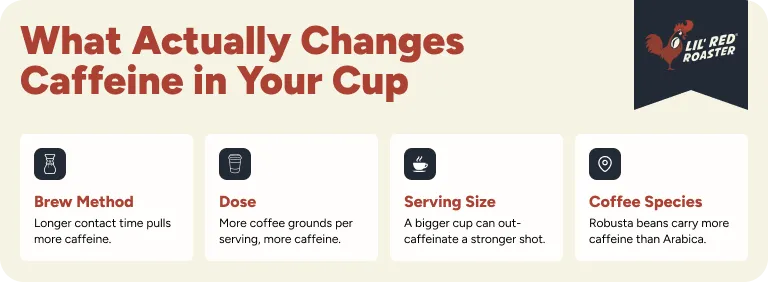
The difference between drinkable roast levels is generally much less important than the amount of coffee used to prepare the beverage.
This is exactly why measuring by volume creates confusion. Dark roasted beans lose more mass and expand more in the roaster, so the same measuring scoop may contain fewer grams of coffee than a scoop of denser light roast. If a brewer uses a scale and doses the exact same number of grams, that volume difference disappears. The comparison becomes much more honest.
Dose and Serving Size Usually Matter More
A coffee recipe begins with a dose. More ground coffee creates more available caffeine. Beverage size then determines how that dose is distributed. A small espresso may feel incredibly intense because it is concentrated, while a larger drip coffee can actually deliver more total caffeine because it uses more water and is consumed in a much larger serving.
The practical lesson is that caffeine cannot be understood from the roast name alone. Look at how many grams of coffee went into the brew, how much beverage was produced, and how much of it was consumed. Those variables explain much more than the difference between "medium" and "dark" labels on the same shelf.
Espresso Is Concentrated, Not Automatically Higher in Total Caffeine
Espresso uses a relatively large dose of finely ground coffee and produces a small beverage under intense pressure. That creates a high caffeine concentration per ounce.
However, a typical double shot may use a dose comparable to a small manual pour-over, but the contact time and beverage volume are very different. The espresso can deliver a strong caffeine concentration while still containing less total caffeine than a large 16-ounce brewed coffee.
This distinction matters in cafés and offices where people add shots to drinks. One latte with two shots and one large drip coffee are not easy to compare by taste. The drip coffee may taste gentler but still deliver more total caffeine. Menu education should focus on serving and dose, not assumptions based on intensity.
Contact Time and Solubility Affect Extraction
Caffeine dissolves readily in water. Longer contact can increase the amount extracted, but it is only one part of the entire system. Grind size, temperature, agitation, coffee dose, and water volume all radically affect how extraction develops. For example, cold brew can contain substantial caffeine when it uses a high coffee dose and a long steep, especially if the concentrate is consumed with limited dilution.
Darker coffee can also be slightly more soluble because the intense roasting has broken down the bean's cellular structure. That may allow extraction to occur more easily, but the resulting difference is not a license to promise a particular caffeine result without rigorous testing. That is why Lil Red focuses on brewing education rather than unsupported milligram claims.
Coffee Species Creates a Larger Difference
Arabica and Robusta are two entirely different coffee species. Robusta generally contains substantially more caffeine than Arabica—often double the amount.
That is a much larger and more reliable directional difference than the common debate over light and dark roast. The higher caffeine level is one reason Robusta developed a reputation for harsh bitterness and intensity, although quality and processing within the species do continue to evolve.
Lil Red focuses on specialty coffees selected for cup quality and sensory value, which are predominantly Arabica. That means our customers should choose among Lil Red offerings based on flavor, brew method, and intended experience, rather than expecting one roast label to deliver a dramatically different stimulant effect.
Use Caffeine Information Responsibly
Caffeine sensitivity varies wildly from person to person. The U.S. Food and Drug Administration (FDA) cites 400 milligrams per day as an amount not generally associated with negative effects for most healthy adults, but that is not a personal prescription. Body size, medications, pregnancy, medical conditions, sleep habits, and individual sensitivity can drastically change how caffeine feels and how quickly it is cleared from your system.
Coffee education should avoid turning a brewing article into medical advice. The responsible message is to understand your serving size, consider your total intake from all sources, and speak with a qualified health professional when health circumstances create uncertainty. (Note: Decaffeinated coffee also contains some caffeine, although much less than regular coffee).
Choose Coffee for the Cup You Want
Caffeine is a part of coffee, but it should not erase the rest of the product. Roast development changes flavor, acidity, sweetness, body, and solubility. The brew method changes concentration and extraction. Species changes chemistry. Serving size changes total intake. A useful coffee decision considers all of those variables instead of reducing the bag to a stimulant score.
My advice is practical: weigh your coffee, know your serving size, and choose the roast strictly for flavor and brewing performance. If caffeine control matters to you, manage your dose and total consumption. That approach is more accurate than chasing a roast myth and much more likely to produce a cup you actually enjoy.
Why Product Labels Rarely Give a Complete Caffeine Answer
Coffee is an agricultural product; caffeine content varies from crop to crop and tree to tree. The exact amount in a served cup also heavily depends on the recipe and preparation method.
This is exactly why restaurants and roasters do not always publish a fixed number for every beverage. A claim that one bag guarantees a precise caffeine result would require laboratory testing the product and the exact preparation conditions that create the final serving. Accuracy builds more trust than a dramatic number that cannot be realistically defended.
A Better Way to Compare Coffee Beverages
When comparing caffeine, use a simple mental worksheet. Consider the coffee dose, beverage size, number of servings, and whether the drink contains espresso, brewed coffee, cold brew concentrate, or an added caffeine ingredient.
Avoid comparing per-ounce concentration with total serving content as if they were the same measure. The worksheet will not create an exact laboratory result, but it will prevent the most common reasoning errors and help you enjoy your coffee with total confidence.
Frequently Asked Questions
Does light roast have more caffeine than dark roast?
Not in a simple universal way. When coffee is weighed before brewing, the roast level usually creates a much smaller difference than the dose, serving size, brew method, and coffee species.
Does espresso have more caffeine than brewed coffee?
Espresso usually has more caffeine per ounce, but the serving is much smaller. A full mug of brewed coffee can easily contain more total caffeine than one or two espresso shots.
Does longer brew time extract more caffeine?
Caffeine is highly water-soluble, so contact time can affect extraction. However, dose, grind size, temperature, and brew method also matter, which is why serving comparisons must be made carefully.
How much caffeine is safe?
The FDA cites 400 milligrams per day as an amount not generally associated with negative effects for most healthy adults, but sensitivity varies. People with health concerns should consult a qualified health professional.
Choose Coffee for Flavor, Not a Caffeine Myth: Explore Lil Red Roaster’s lineup and choose your next coffee based on the roast, flavor, and brewing experience you actually want. Shop All Coffee