Master Roaster Brad on Brewing by Weight: Why Ratios Beat Scoops
Learn why measuring coffee by weight instead of volume creates a consistent, repeatable brew, reduces waste, and helps you dial in the perfect cup every single time.


Consistency Starts Before the Water Touches the Coffee
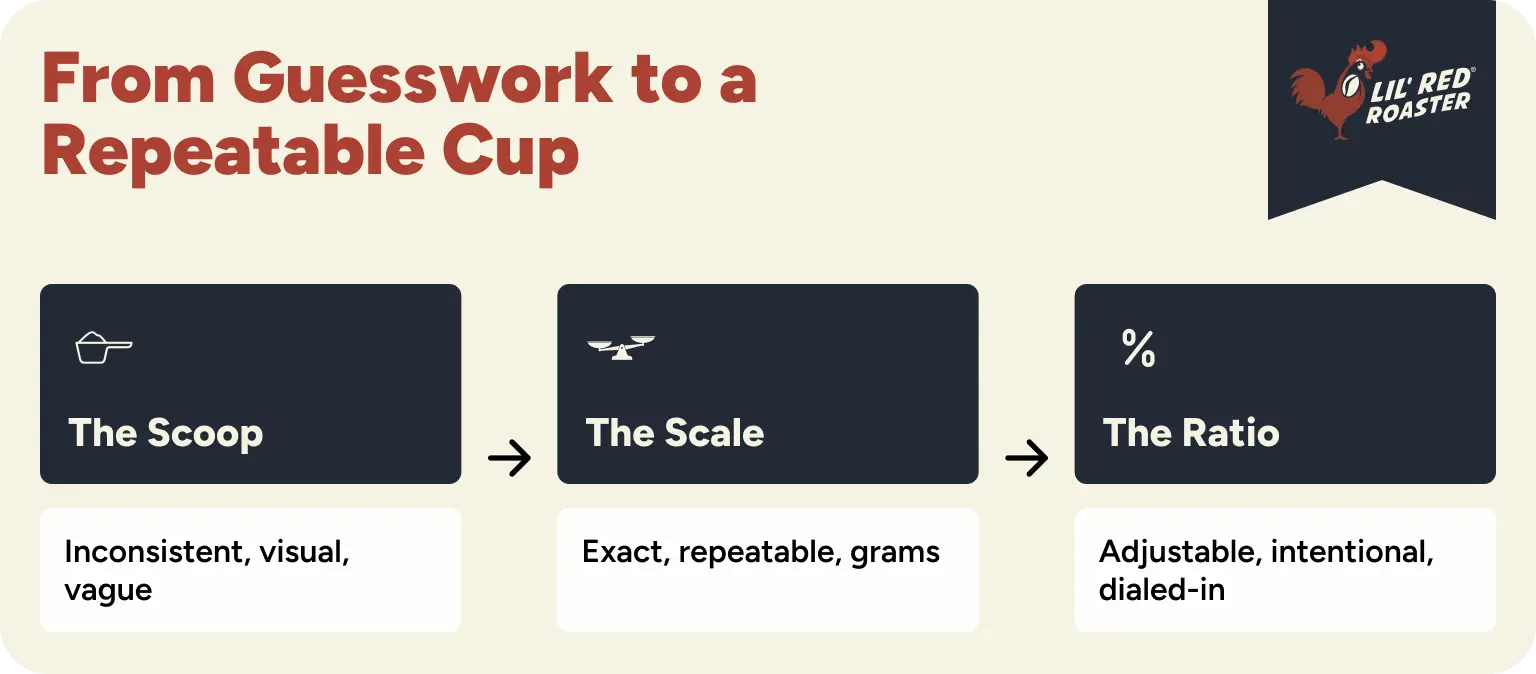
Many brewing problems are blamed on the beans, the grinder, or the brewer when the real issue is much simpler: the recipe changes every time. A scoop feels convenient, but volume is a weak way to control coffee. Bean size, roast development, density, grind, and how the scoop is filled all drastically change how many grams enter the brew basket.
As a roaster, I always recommend weighing your coffee and water because a scale turns a vague routine into a repeatable system. Once the coffee and water are known variables, the brewer can taste the result, make one intentional change, and understand exactly what happened. Without measurement, improvement becomes guesswork.
Volume Changes Even When the Scoop Looks the Same
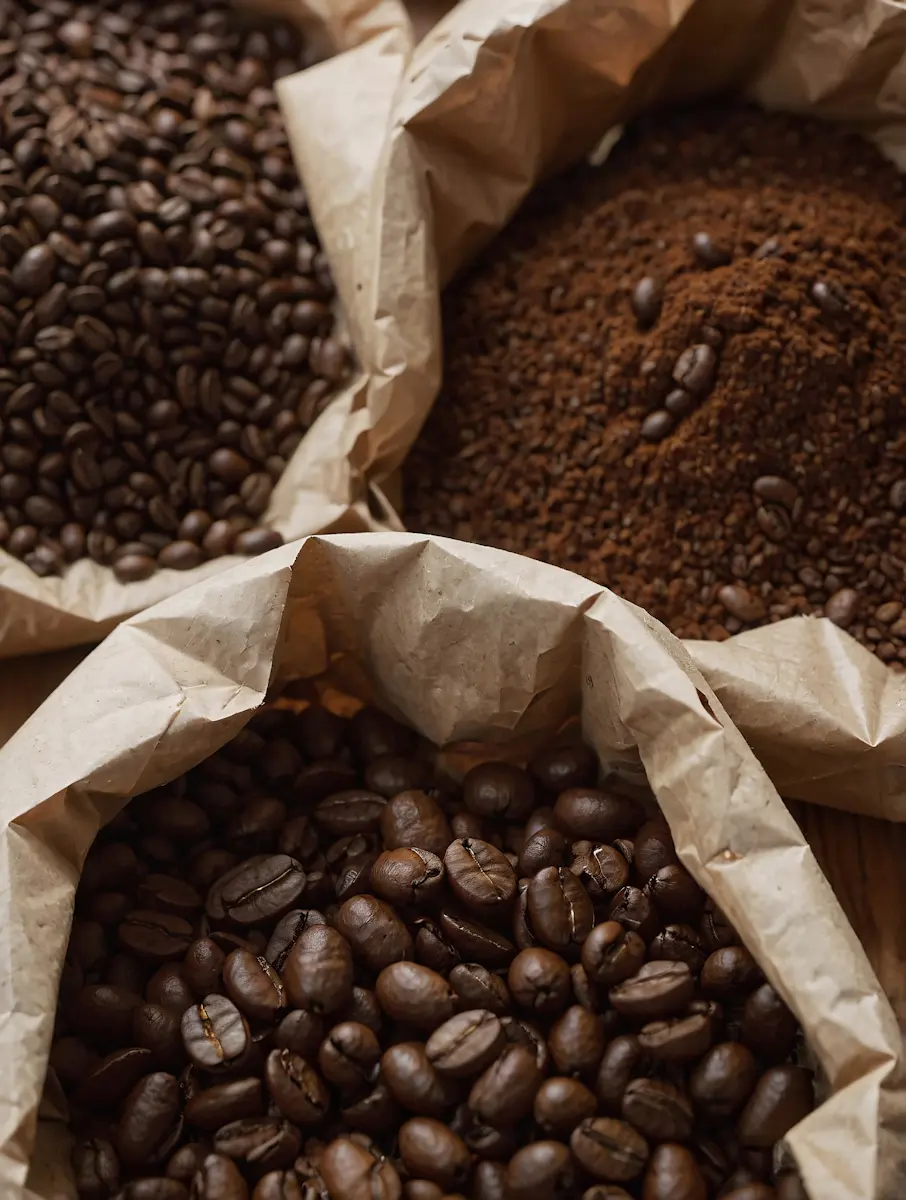
Darker roasted beans expand more and lose more mass during roasting. Lighter roasted beans are often much denser. A level scoop of each may look visually identical while containing a vastly different amount of actual coffee.
Grinding adds another massive variable because fine particles pack differently than coarse particles. A heaping scoop adds still more uncertainty.
Weight removes all of those visual traps. Twenty grams is twenty grams regardless of whether the beans are large, small, light, dark, whole, or ground. That stability is exactly why professional coffee recipes are written in grams and liters rather than scoops and vague cup measures.
A Brew Ratio Creates a Useful Starting Point
A brew ratio expresses the mathematical relationship between coffee and water.
For drip and pour-over, a common starting point is about 60 grams of coffee per liter of water, which is close to one part coffee for every 16.7 parts water (1:16.7). That is not a strict law. It is a reference point that allows the brewer to adjust based on the coffee, grinder, method, and preferred strength.
Other methods require different ratios. My flash-brewed iced coffee recipe uses a tighter ratio because part of the water is frozen, and the hot portion must create a concentrate before the ice melts. Espresso uses a beverage ratio based on the weight of liquid espresso compared with the dry dose. The specific number changes depending on the drink, but the discipline remains the exact same: measure the system.
Strength and Extraction Are Different
Brewers often react to a weak cup by using more coffee and to a bitter cup by using less. That can work accidentally, but it confuses strength with extraction.
- Strength: Describes how concentrated the beverage is (how much coffee is in the water).
- Extraction: Describes how much soluble material moved from the grounds into the water.
A coffee can be strong and under-extracted, or weak and over-extracted. Weighing gives the brewer a stable recipe so grind, time, temperature, and agitation can be evaluated separately. If the cup is sour and thin at the correct strength, the answer may be a finer grind or longer contact time, not simply throwing in more coffee. If it is bitter and drying, the answer may be a coarser grind or shorter contact.
Measurement Improves Cost Control
At home, chronic overdosing empties a bag faster without guaranteeing a better cup. In an office, restaurant, hotel, or café, that same habit becomes a serious margin problem.
A few extra grams multiplied by many brews and many locations can create meaningful product waste. Teams may not even notice because each individual scoop seems "close enough."
A documented, gram-based recipe creates accountability without making service complicated. Staff can be trained once, performance can be checked quickly, and purchasing becomes easier to forecast. Quality and cost control improve together because the organization stops treating inconsistency as normal.
A Scale Makes Troubleshooting Faster
When a brew disappoints, the team should be able to answer basic questions:
- How much coffee was used?
- How much water?
- What was the grind setting?
- How long did the brew take?
Without those answers, every correction is speculative. With them, the process becomes teachable. This is especially important when a new crop arrives or when a grinder, filter, or brewer changes. Coffee is not static. A measured baseline allows the roaster or coffee support team to recommend a precise adjustment instead of beginning the diagnosis from zero.
Simple Tools Are Enough
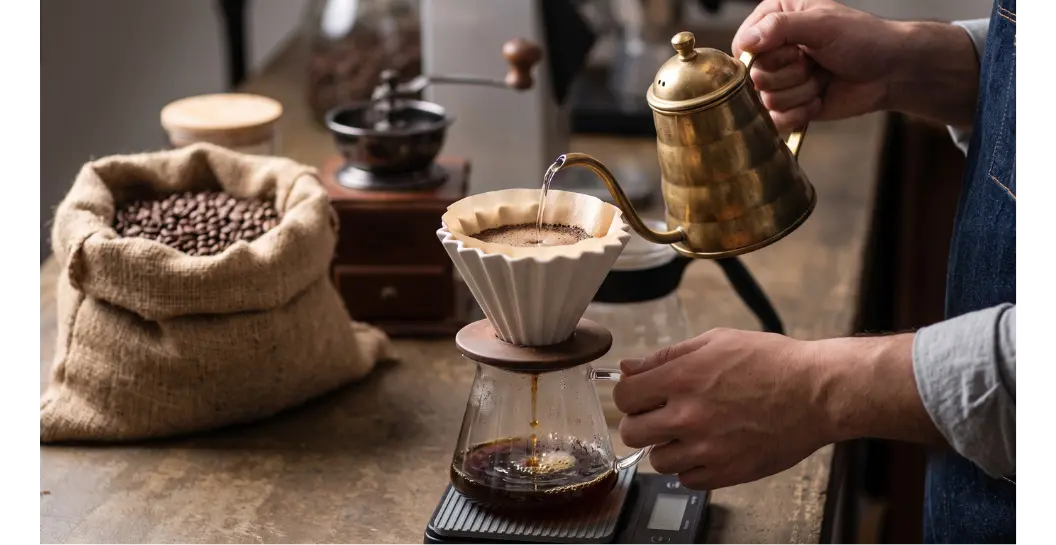
A scale does not need to be expensive. It simply needs to read in grams, hold the brewer or container safely, and respond quickly enough for the method. A timer is useful for manual brewing, and many digital scales include one. The most important feature is simply that the tool is used consistently.
- Batch Coffee: Teams can pre-portion doses or create a recipe card for each brew volume.
- Espresso: Weigh the dry dose going in and the beverage output coming out.
- Cold Brew: Weigh the coffee and water before steeping.
The same discipline works across all methods because it creates a common language.
Better Coffee Often Begins With Better Process
Customers sometimes assume that improving coffee requires a new machine or a much more expensive bag of beans. While those changes can help, process improvements almost always create the fastest gain.
Weighing is the ultimate process improvement. It makes the recipe visible, reduces waste, and gives the brewer a reliable way to learn. My point is not that every cup must become a rigid laboratory exercise. It is that a few seconds of measurement can remove minutes of confusion. Once the recipe is stable, the brewer can focus on taste, hospitality, and the experience coffee is supposed to create.
How a Team Should Turn Ratios Into a Working Standard
A commercial recipe needs more than one number. It should identify the coffee, equipment, batch size, filter, grind reference, dry dose, water or beverage output, target time, and holding limit. The document should be visible where the work occurs and simple enough to use during a busy shift. A recipe that lives only in a training binder will not control daily execution.
Managers should verify the recipe with a quick taste and measurement rather than relying on visual memory. If a team repeatedly misses the dose, pre-portioning may be appropriate. If brew times drift, grinder calibration or equipment condition may be the issue. The measurement system helps separate people, process, and equipment problems instead of treating every failure as operator carelessness.
For home customers, the same logic can remain simple. Write your preferred dose and water weight on the coffee bag or in a note on your phone. Repeat it three times before changing the recipe. Once the baseline is stable, adjust based on taste. That small discipline makes product comparisons more meaningful because the brew is no longer changing randomly.
Why Ratios Improve Customer Support
When a customer contacts Lil Red with a brewing problem, a measured recipe creates a much better conversation. We can ask for the coffee dose, water weight, grind size, time, and equipment, and then recommend a highly specific change. Without those details, support just becomes a list of generic possibilities.
Measurement makes the roaster’s expertise easier to apply remotely. A scale is not only a brewing tool; it creates a shared language between the roaster and the person making the coffee.
Frequently Asked Questions
What coffee to water ratio should I start with?A common starting point for drip and pour-over is about 60 grams of coffee per liter of water, or roughly one part coffee to 16.7 parts water. Taste and brew method should guide your final adjustment.
Why is a scoop inconsistent?
Roast level, bean density, grind size, and how tightly the scoop is filled all change the actual mass of the coffee. Two equal-looking scoops can contain drastically different doses.
Do I need an expensive scale?
No. A basic digital kitchen scale that reads in grams is enough for most home and office brewing. A timer and a stable platform are useful, but precision does not require luxury equipment.
Does weighing coffee save money?
Yes. It prevents chronic overdosing, makes staff training easier, and helps teams identify whether a quality problem comes from the recipe rather than automatically using more coffee to fix a weak brew.
Sources & Further Reading
Specialty Coffee Association. Towards a New Brewing Chart.
Make Your Next Brew Repeatable
Choose your coffee, grab a simple scale, and use a measured ratio to turn a good cup into a repeatable one. Shop Lil Red Coffee