Best Coffee Beans for Espresso at Home: Why Most Beans Fail and How to Fix It
Most home espresso problems start with the beans. Learn how roast date, roast profile, and freshness affect shot quality before you blame the machine.


The Wrong Variable Gets Blamed
When espresso turns out poorly, most home users blame the machine. They upgrade accessories, change tamp pressure, adjust grind settings, and search for technical fixes. Those adjustments matter, but they often ignore the most important input: the beans.
Espresso is unforgiving because it is a constrained extraction system. The Specialty Coffee Association has reported that a common espresso profile among baristas relies on a very specific set of parameters. Those parameters show how narrow the operating window is. If the coffee is not suitable for that system, the machine cannot overcome the input problem.
Quick Reference Card: Standard Espresso Parameters
- Dose: 18 to 20 grams
- Brew Ratio: Roughly 1:2 (e.g., 20g in, 40g out)
- Extraction Time: 25 to 30 seconds
- Pressure: Approximately 9 bars
- Temperature: Approximately 200°F (93°C)
The Core Problem: Espresso Is a Performance System
Drip coffee gives the brewer more room for error. Espresso compresses extraction into seconds. Water moves through a tightly packed coffee puck under pressure. Grind size, puck preparation, freshness, roast development, and bean solubility all determine whether the shot extracts properly.
That is why general purpose coffee often disappoints in espresso. The issue is not that the coffee is bad. The issue is that it was not developed for pressure based extraction.
Why Beans Fail in Espresso
The first failure point is staleness. Coffee changes after roasting. It releases carbon dioxide, loses aromatic compounds, and gradually oxidizes. Freshness windows vary by roast and storage, but many specialty coffee guides treat the first few weeks after roast as the most useful performance period for flavor and extraction. For espresso, that matters because gas retention affects crema and flow behavior.
The second failure point is roast mismatch. Very light roasts can be complex and expressive, but they are often harder to extract in home espresso. Very dark roasts extract easily but can become bitter, flat, or smoky. A balanced medium or medium dark profile often gives the home user the best combination of sweetness, body, and consistency.
The third failure point is retail lag. Coffee distributed through broad retail channels may sit in warehouses, on shelves, or in fulfillment systems before the consumer opens it. That model is optimized for availability, not peak espresso performance.
Freshness Is Functional, Not Cosmetic
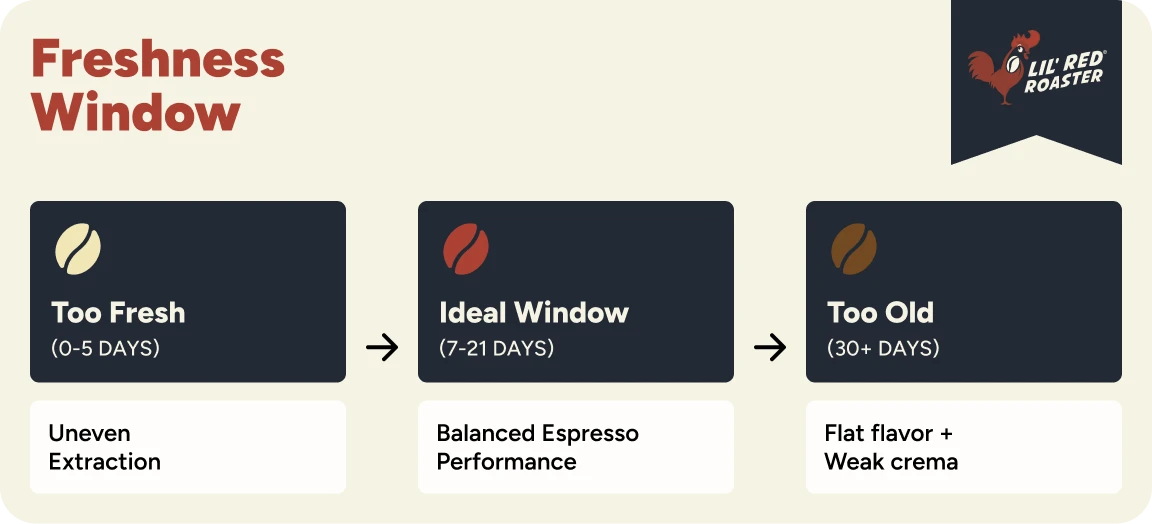
Freshness is often discussed as taste. For espresso it is also functional. Beans that are too old may produce weak crema, faster flow, and flat flavor. Beans that are too fresh can release too much gas and produce uneven extraction. The goal is not simply newest possible. The goal is properly rested and still fresh.
Espresso readiness principle: choose coffee with a visible roast date, allow a short rest period after roast, and consume while aromatics and extraction behavior remain stable. For many home users, roughly 7 to 21 days after roast is a practical operating window, adjusted by roast level and storage.
Need freshly roasted beans built for pressure extraction? Shop Lil Red Roaster Espresso Blends Here
Behavioral Reality: Consumers Over invest in Equipment
Home espresso buyers often spend heavily on machines and accessories before solving coffee quality. That reverses the actual importance hierarchy. The best sequence is beans, grinder, technique, and then machine. A better machine can improve control, but it cannot make stale or poorly matched beans perform like a purpose built espresso coffee.
Roast Profile Tradeoffs
Light roast espresso can produce bright, fruit forward flavor, but it requires a strong grinder, careful puck preparation, and precise extraction. Medium roast espresso gives more balance and is easier to stabilize. Dark roast espresso produces body and intensity, but often sacrifices nuance.
The right answer depends on the user. A beginner looking for consistency should not start with the most challenging coffee. A more experienced user with a strong grinder and willingness to experiment can move into lighter profiles.
Decision Framework for Espresso Beans
- Confirm roast date before purchase.
- Choose a roast profile suited to your machine and skill level.
- Prioritize chocolate, caramel, nut, and balanced acidity profiles if you want consistency.
- Avoid generic retail coffee when espresso performance is the goal.
- Adjust grind after confirming the coffee is appropriate.
Consequences of Getting It Wrong
If the beans are wrong, the user enters a false troubleshooting loop. They change grind settings, change dose, change tamping, blame the machine, and eventually buy more equipment. The actual issue may have been stale coffee or a roast profile mismatched to the brew method.
Final Position
Most espresso problems are input problems before they are equipment problems. Better beans simplify dialing, stabilize extraction, and improve flavor before any machine upgrade occurs.
If your espresso is inconsistent, do not start by replacing your machine. Start by evaluating roast date, roast profile, and whether the coffee was designed for espresso.
Frequently Asked Questions
Q: Why do espresso beans matter so much?
A: Espresso extracts under pressure in a tight time window, so freshness, roast profile, and bean suitability shape the result more than many users expect.
Q: What roast works best for home espresso?
A: For many home users, medium or medium dark profiles offer the best balance of sweetness, body, and consistent extraction.
Q: How fresh should espresso beans be?
A: A practical window is often around 7 to 21 days after roast, adjusted by roast level and storage.
Q: Should I upgrade my machine first?
A: Not usually. Beans, grinder quality, and technique generally matter before a machine upgrade.
What This Unlocks Next
The next issue in the buying journey is rarely isolated. Once this question is answered, the next pressure point usually becomes visible in the next layer of the system.
Read the next article in the Lil Red Roaster series: Private Label vs White Label Coffee: How to Choose the Right Model Without Wasting Capital