Are Coffee Subscriptions Worth It? The Real Economics of Freshness, Cost, and Consistency
Coffee subscriptions are not only about convenience. Learn how freshness, timing, waste, and consistency shape the real economics of subscription coffee.


Subscriptions Are Misunderstood
Coffee subscriptions are often marketed as convenience. Never run out. Set it and forget it. Delivered to your door. Those benefits are real, but they understate the actual value.
A good coffee subscription is not just a convenience tool. It is a freshness and consumption alignment system. It connects roasting, delivery, and usage in a way that retail coffee often cannot.
The Core Problem: Retail Coffee Is Optimized for Distribution
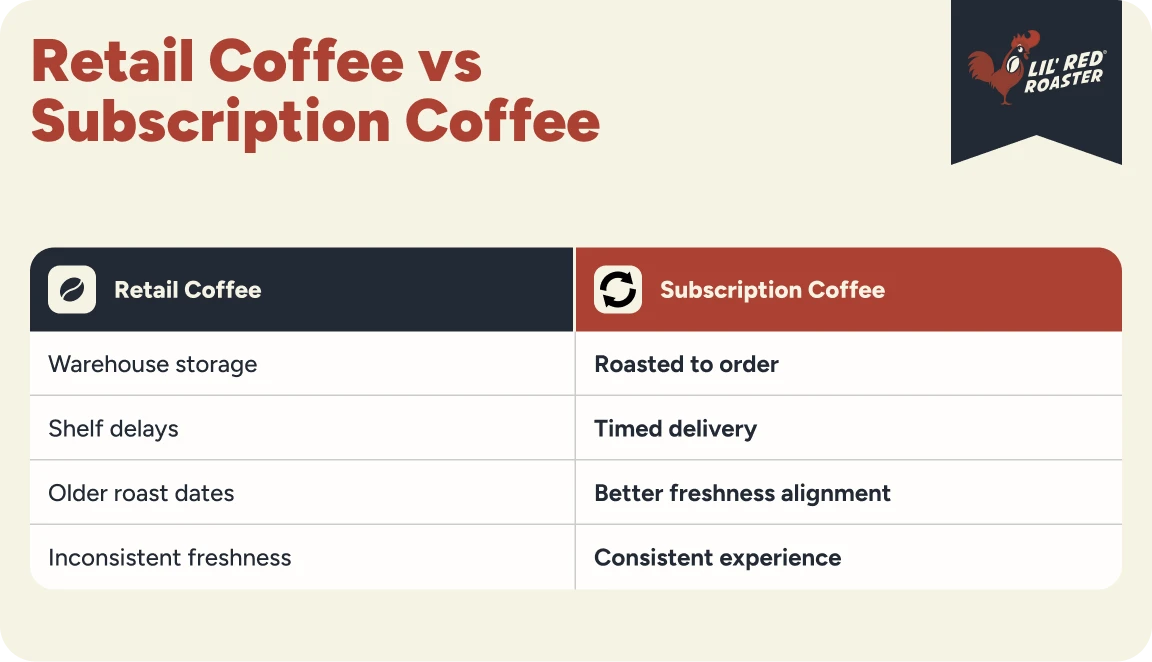
Retail coffee is designed to move through warehouses, distribution centers, store shelves, and e commerce systems. That model supports availability and scale, but it does not always support peak flavor at consumption.
Coffee quality changes after roasting. Aromatics decline, carbon dioxide releases, and oxidation gradually reduces clarity. Many fresh coffee guides emphasize a practical peak window in the first several weeks after roasting, often around 7 to 21 days depending on roast level and storage. Retail systems can push coffee beyond that window before the customer even opens the bag.
What Subscriptions Actually Fix
Subscriptions fix timing. They align how often a customer uses coffee with how often fresh coffee arrives. When done well, the customer receives coffee close enough to roast date to preserve flavor, but not so much that bags sit unused.
That is the real value. Not just convenience. Control.
Cost Analysis: Why Price Per Bag Is Incomplete
Consumers often compare subscription price to grocery price. That misses the bigger economics. A cheaper bag that tastes stale, goes unused, or drives the customer back to cafe purchasing is not truly cheaper.
A subscription can create value through reduced waste, more consistent quality, fewer impulse purchases, and better brewing outcomes. The comparison should be total experience cost, not sticker price.
Ready to align your coffee delivery with your actual consumption? Explore Lil Red Roaster Subscriptions
Who Benefits Most
Subscriptions work best for daily drinkers and households with predictable usage. A household that brews every morning can estimate weekly consumption and match delivery frequency. That keeps coffee moving through the freshness window.
Subscriptions work poorly for occasional drinkers or households with inconsistent usage. If bags pile up, the model fails because the freshness advantage disappears.
Subscription Optimization Framework
- Estimate daily cups consumed.
- Convert cups to weekly coffee weight.
- Choose delivery frequency that matches usage.
- Adjust after the first month.
- Store unopened coffee properly and avoid buying excess backup inventory.
Consumption Calculator Prompt: > * 1 cup per day: ~250g (8.8oz) per week -> Choose a 12oz bag every 1-2 weeks.
- 2 cups per day: ~500g (17.6oz) per week -> Choose two 12oz bags (or one 2lb bag) every 1-2 weeks.
- 3+ cups per day: ~750g+ (26.4oz+) per week -> Choose a 2lb bag every week.
The Behavioral Advantage
A subscription reduces decision fatigue. Instead of shopping after running out, the customer has a planned system. That improves consistency and reduces the likelihood of defaulting to stale retail options or expensive coffee shop purchases.
Tradeoffs
Subscriptions reduce friction but require accurate usage. They improve freshness but can create waste if over ordered. They support consistency but may reduce spontaneous variety unless the service includes rotation.
Consequences of Getting It Wrong
When subscriptions are poorly matched to consumption, customers accumulate coffee, lose freshness, cancel, and conclude the model is not valuable. The issue is not the model. The issue is the wrong cadence.
Final Position
Coffee subscriptions are not primarily about convenience. They are about supply timing. Retail coffee is optimized for availability. Subscriptions are optimized for consumption.
If you drink coffee consistently, choose a subscription based on how much you actually consume, not how much you hope to drink.
Frequently Asked Questions
Q: Are coffee subscriptions worth it?
A: They can be, especially for consistent drinkers who benefit from better freshness timing and reduced waste.
Q: Why is freshness such a big issue?
A: Coffee changes after roasting, so the timing between roast, delivery, and use strongly affects flavor and overall value.
Q: Who should avoid subscriptions?
A: Occasional drinkers or households with highly inconsistent usage may struggle to match delivery cadence to real consumption.
Q: How do I choose the right subscription cadence?
A: Estimate usage honestly, choose a delivery frequency based on that pattern, and adjust after the first month if needed.
What This Unlocks Next
The next issue in the buying journey is rarely isolated. Once this question is answered, the next pressure point usually becomes visible in the next layer of the system.
Read the next article in the Lil Red Roaster series: How to Choose the Right Coffee Roast: Flavor, Strength, and What Most People Get Wrong
Subscribe to get the next Lil Red Roaster insight on workplace coffee, espresso quality, private label and white label coffee, subscriptions, roast selection, and beverage program ROI.
Still not sure if a coffee subscription is right for your daily brew? Or maybe you need help picking the perfect roast? We'd love to help you find your perfect match.